|
Business War Games -
objectives, benefits, key aspects, examples
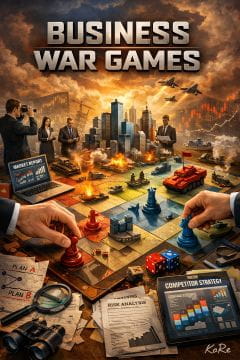 
Business war games are
interactive, role-playing simulations used to test,
refine, and stress-test corporate strategies, strategic
ideas, and strategy innovations against potential
competitor moves and market shifts. By dividing
participants into teams - representing the company,
competitors, and market controllers - organizations can
identify blind spots, discover entrepreneurial
opportunities, anticipate reactions, and develop
proactive, evidence-based strategies in a risk-free
environment.
| |
Train with Cunning Deceivers
When preparing to
win, train with cunning deceivers – they'll
teach you how to overcome real-life obstacles
better than anyone else...
More |
|
 |

Key Aspects of Business War Games
Structure: Teams simulate 2-3 year market scenarios over
several rounds, making decisions on products, pricing,
and strategies.
Types: Games range from qualitative (role-playing and
discussion) to quantitative (using software/data for,
say, image.gif
scenarios) and hybrid approaches.
Participants: Typically involve senior leadership, with
external perspectives (consultants/analysts) sometimes
added to minimize internal bias.
Objectives: These exercises help companies test
strategic initiatives like new market entry, product
launches, or defensive moves against competitors.
Benefits for Strategy Development
Anticipate Competitor Moves: By playing as the
competitor, you can understand their mindset and predict
their reactions.
Identify Vulnerabilities: War Games uncover strategic,
operational, or financial weak points.
Improve Decision Making: As a safe, simulated
environment, business war games allow testing
high-stakes decisions without real-world risk.
Common Scenarios Tested
Competitor Entry/Reaction: How competitors will respond
to a new product launch.
Disruptive Events: Testing company resilience to supply
chain crises, pandemics, or regulatory changes.
Strategic Pivot: Assessing the success of a major shift
in business model.
Implementation Phases
Preparation: Define the scope, objectives, and key
market players.
Scenario Design: Develop realistic scenarios based on
market intelligence.
The Game: Execute rounds of play with teams acting and
reacting.
Debrief & Action: Analyze the outcomes to create
concrete strategic action plans.
|