|
Thinking Innovation as the
Key to Thriving in Dynamic Environments
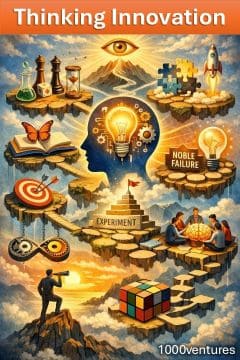  
🌅 Summary
KoRe-style proverb: When your thinking evolves faster
than your environment, you stop surviving and start
shaping the future.
Thinking Innovation is the disciplined art of generating
novel, valuable solutions by creatively leveraging
capabilities, perspectives, and methods. It blends
super‑conscious thinking, meta‑thinking, and super‑gamification
to spark super‑creativity, empathy, experimentation, and
iteration. Unlike simple idea generation, Thinking
Innovation is value‑driven, action‑oriented, and
designed to help individuals and organizations thrive
amid uncertainty and rapid change.
7 Ways to Master Thinking Innovation
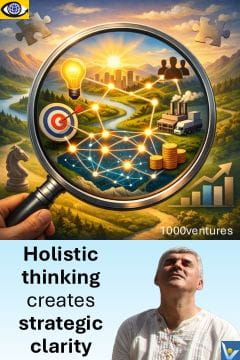
1. Higher‑Sight Thinking
See beyond the obvious by elevating your perspective
above daily noise. Higher‑sight helps you recognize
patterns, opportunities, and emerging possibilities
others overlook. It transforms complexity into clarity
and clarity into strategic advantage.
2. Creative Cross‑Pollination
Expose your mind to diverse thinkers, disciplines, and
cultures. Cross‑pollination multiplies insights and
accelerates breakthrough thinking. It turns isolated
ideas into synergistic innovations with real‑world
impact.
3. Achievement Attitude
Adopt a mindset that expects progress, not perfection.
Achievement attitude fuels persistence, courage, and the
willingness to act before certainty arrives. It
transforms ambition into momentum and momentum into
mastery.
4. Noble Failure Mindset
Treat every intelligent failure as a forward step. Noble
failures reveal blind spots, refine strategies, and
strengthen resilience. They turn setbacks into strategic
learning assets.
5. Structured Super‑Thinking
Use meta‑thinking, super‑conscious thinking, and super‑gamification
to elevate your cognitive process. Structured
super‑thinking blends intuition with disciplined
frameworks. It enables you to generate solutions that
are both imaginative and executable.
6. Creative Dissatisfaction
Stay constructively dissatisfied with the status quo.
Creative dissatisfaction keeps curiosity alive and
prevents complacency. It pushes you to continuously
reinvent, refine, and reimagine what’s possible.
7. Experimentation as a Habit
Test ideas early, cheaply, and often. Experimentation
transforms assumptions into insights and insights into
validated solutions. It builds adaptive capacity and
accelerates innovation cycles.
Three Takeaway Questions
What higher–level thinking shift could help you see your
current challenges and opportunities in a new light?
Which
simulation games could you play and which bold
experiment could you run this week to
turn uncertainty into insight?
How can you cultivate a daily habit of creative
dissatisfaction that fuels continuous reinvention?
*** GLOSSARY ***
Thinking innovation refers to the cognitive process of
generating novel, valuable solutions by creatively
leveraging capabilities, resources, perspectives, and
methods. It emphasizes creativity, inventiveness,
enlightenment, highersight, and problem-solving through
higher-level and/or structured approaches like
super-conscious thinking, meta-thinking, and super-gamification
which fosters super-creativity, empathy,
experimentation, and iteration.
Thinking Innovation enables individuals and
organizations to adapt and thrive in dynamic
environments. Unlike mere idea generation, thinking
innovation focuses on value creation and actionable
outcomes that drive real-world impact.
Thought leaders can cultivate this mindset by embracing
an achievement attitude, living creating
dissatisfaction, treating noble failures as steps
forward, and cross-pollinating ideas with other thought
leaders. In a corporate environment, it also involves
overcoming organizational barriers such as fear of
punishment and rigid hierarchies.
|