| |
|
Glossary
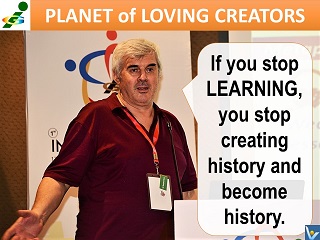
Mutual Learning
Mutual learning is a two-way
exchange where people or groups
share knowledge, test
assumptions, and build
understanding together rather
than relying on one-way
instruction or top-down control.
|
|
 |
| |
|
Wisdom Shared
One mind lights another,
Two rivers of thought converge,
New horizons bloom.
|
|
 |
|
Growing Together
I teach, you teach me,
Each heart becomes a wiser heart,
Together we grow.
|
The Circle of Learning
Many voices blend,
Each gives a spark, receives a flame,
Wisdom has no end.
|
| |
|
Learning mutually refers to a
collaborative process where
individuals or groups exchange
knowledge, skills, and
perspectives simultaneously.
|
|
|
| |
|
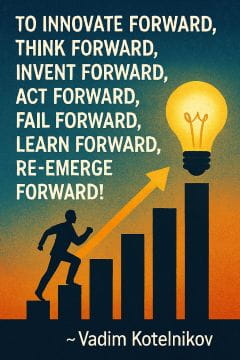
Key habits include:
sharing your perception while
asking genuine questions,
synergizing relevant
information, explaining your
reasoning, appreciating each
person's unique insights,
focusing on common interests
over fixed positions, and
jointly
designing the future.
|
|
|
 |
|
Mutual learning
fosters deeper understanding, builds empathy,
and strengthens relationships.
It is especially
effective in diverse teams, educational
settings, and cross-cultural interactions.
Mutual learning
encourages active participation, shared
responsibility,
intellectual crosspollination, and
continuous improvement. By valuing each person's
unique insights, it creates inclusive
environments where everyone grows together.
In
growth ecosystems, such as
EcoHISIC, co-innovating, learning mutually,
and moving faster creates greater collective
impact. |
|
| |
|
In
a Collaborative Inquiry,
participants explore ideas
together as co-learners,
cross-pollinating insights and
harmonizing voices rather than
treating one person as the sole
authority.
|
|
|
| |
|
In
Leadership & Communication,
mutual learning replaces
unilateral control with
curiosity, transparency,
intellectual cross-pollination,
shared problem-solving, and
spiral integration of ideas (SPIN).
|
|
|
|
|
