| |
A circular economy
(CE)
is an economic model which aims to
produce goods and services in a
sustainable way, by reducing the
consumption of virgin materials as
well as
waste generation.
CE is an economic
system that tackles global challenges like climate change, biodiversity
loss, waste, and pollution.
|
|
 |
| |
|
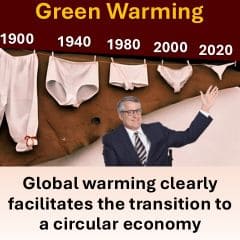
Global warming does not directly
facilitate the transition to a
circular economy, but its urgent
impacts create strong incentives
for such a shift.
|
|
|
 |
|
Rising
temperatures and extreme weather events
highlight the need to reduce greenhouse gas
emissions and resource depletion. A circular
economy supports this by minimizing waste,
reusing materials, and lowering carbon
footprints across supply chains.
Thus, climate
pressures act as a catalyst, driving circular
innovation and policy support for
sustainable systems. |
|
| |
Global warming and
the climate crisis drive the transition to a
circular economy by exposing the hard limits of
traditional, resource-heavy linear models and
creating urgent pressures to cut emissions that
renewable energy alone cannot fix.
Global warming
forces governments and industries to adopt
circular practices – such as keeping materials
in use and designing out waste – to tackle these
hard-to-reduce industrial emissions.
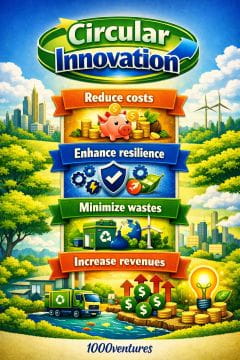
Circular Innovation
Circular
innovation is the development of products,
services, and business models that eliminate
waste and keep materials in use...
More
|
|
 |
| |
|
Eliminating Waste Sector
Emissions
Open dumping and decaying
organic waste release massive
amounts of methane and other
greenhouse gases. Climate
targets push cities and nations
to upgrade waste management
systems into closed-loop cycles.
Converting food waste into
organic fertilizer or biogas
stops pollution and returns
nutrients safely to the soil.
|
|
|
| |
|
Reducing Reliance on Virgin
Materials
Extracting and processing raw
natural resources causes heavy
carbon pollution and habitat
destruction. As climate
pressures mount, reusing,
repairing, and recycling
high-emission materials reduces
the demand for new virgin
resources. Retaining the
embodied energy of existing
products lowers the overall
carbon footprint of
manufacturing.
|
|
|
| |
|
Driving Policy and Innovation
Climate goals act as a catalyst
for new regulatory frameworks
and carbon-pricing mechanisms
that penalize waste and reward
circular innovation.
Digital tracking technologies,
like
blockchain and advanced
sensors originally used for
monitoring emissions, now help
trace material flows and verify
green supply chains. |
|
|
|
|