|
Contents
1.
Know WHY:
Vision, Values,
Capabilities
6Ws of
Business Success: An Introduction
The
Tree of Business
See
the slide
10 Rules for Building a Sustainable
Growth Business
Lessons
from Jack Welch:
Articulate Your Vision
Corporate Vision
See
the slide
Strategic Intent
Launching a Crusade
Shared Values
Lessons
from Jack Welch: Put Values First
See
the slide
Best
Practices: GE Values Guide
Best
Practices:
HP Values
Sustainable Competitive Advantage:
Five Criteria
Strategic Management:
Resource-based View
Corporate Capabilities
2.
Know WHAT:
Sustainable Value Creation
Healthy Company: 7 Components
Best Practices:
10 Lessons from Konosuke Matsushita
See
the slide
Rapidly Changing Global Scenario
See
the slide
Fundamental Management Changes
Engendered by Internet
High-Growth Business Development: 4
Stages
Balanced Business System
See
the slide
Balancing Dynamic Organizational
Dichotomies
The Tao of Business Success
See
the slide
Generic Components of a Healthy
Company
Best
Practices: Sam Walton's 10 Rules
Sustainable Competitive Advantage:
Resource-based View
Sustainable Competitive Advantage: Synergy of Capabilities
See
the slide
Business BLISS: Balance
Leadership Innovation Synergy Speed
Success
Story: Creating the World's Most Competitive
Enterprise
Best
Practices:
25 Lessons from Jack Welch
Lessons from Jack Welch:
Simplify
Organizational Fitness Profile (OFP)
Business Innovation: Four
Strategies
The Tao of Customer Value Creation
See
the slide
Customer-driven Innovation: 7
Practice Tips
Creating Sustainable Profit Growth:
9 Questions to Answer
9 Basic Sources of Growth
Innovation Strategies for Top-line
and Bottom Line Growth
Lessons
from Jack Welch:
Constantly Focus on Innovation
Innovation the Key to Success and
Survival Systemic Innovation: 7 Areas
See
the slide
Best
Practices:
Characteristics of Most Successful Companies
Innovation System
Strategies for Building a Growth Culture
Best
Practices:
Building a Flexible Culture at Dell Computers
Performance Management: Balanced
Scorecard
3.
Know WHERE: Business Strategies
Three Hierarchical Levels of
Strategy
Strategic Leadership
Results-based Leadership
Strategy Pyramid vs. Strategy Stretch
See
the slide
Choosing Between Strategy and
Opportunity Approach
Lessons
from Jack Welch:
Stretch
SMART Goals
Three Generic Business Strategies
Four Types of Marketing Warfare
Differentiation Strategy: 3 Parts
Strategy Programming vs. Strategy
Innovation
SWOT Analysis
Strategic Achievement: Thinking Χ
Action Χ Learning
Strategic Thinking
Dynamic Planning
Milestone-based Thinking
Product Innovation: Types of New
Products
Strategic Road-mapping
4.
Know WHEN:
Change Management
Lessons
from Jack Welch:
Face Reality
Extreme Leadership: 10 Best
Practices
Discovering Opportunities
Searching for Opportunities
Entrepreneurial Leaders: Specific
Attributes
Failure as a Stepping Stone to
Success
Lessons from
Jack Welch:
See Change as an
Opportunity
Turning
Opportunities To Advantage: 5Ws I-Ching Advice
The Tao of Change Management
See
the slide
6Ws of Change Management
Change Management: 6 Steps
Leading Change: 8 Stages
5.
Know WHO:
Leaders, Teams, Partners
Effective Leader: Attributes Χ
Results
Shift from Management to Leadership
Lessons
from Jack Welch:
Lead
The Tao of Management by Leadership
Managing Knowledge Workers
Leadership Attributes
See
the slide
Best
Practices: Welchs 4Es of Leadership
Creative Leadership
If You Want To Grow: 6 Advices from
Richard Branson
Entrepreneurial Leadership: 10 Key
Role Actions
Lessons
from Jack Welch:
Cultivate Leaders
Employee Performance Management: Holistic Approach
Lessons
from Jack Welch:
Involve Everyone
The Tao of Employee Empowerment
See
the slide
Lessons
from Jack Welch:
Instill Confidence
Building Trust
Employee Satisfaction
Best
Practices:
Lend Lease's Employee Wellbeing Foundation
Inspiring People
See
the slide
Lessons from
Jack Welch:
Energize Others
Team
Building: a Dream Team
Tean3 Opinion Poll:
The
Five Keys To Team Success
Creating Cross-functional Teams
Innovation-friendly Organization: 6
Components
Engaging Cross-functional
Innovation Teams
Leading Systemic Innovation
Creating a Relentless Growth
Attitude
Lessons
from Jack Welch:
Create a Learning Culture
Best
Practices: 4 Strategies for Raising Corporate IQ
at Microsoft
The Wheel of Knowledge Management
Facilitating Cross-pollination of
Ideas
Effective Coaching: Definition and
the Keys to Success
Coaching in the Workplace: Key
Benefits
Three Manager's Skill Sets:
Manager Leader Coach
The Tao of Leveraging Diversity
The Fun Factor
Service-Profit Chain
Strategic Alliances
6.
Know HOW:
Business Model
Best
Practices:
Characteristics of the Most Successful Companies
Business Model: Connecting Internal
Inputs to Economic Outputs
Business Model: 1+6 Components
See
the slide
10 Forces Behind New Business
Models
Success
Story:
New Business Model of Dell Corporation
Competitive Strategies
See
the slide
Customer Value Proposition
The Tao of Value Innovation
See
the slide
Synergistic Marketing and Selling
See
the slide
The Top 10 Laws of Marketing
Brand Equity
Customer Intimacy
Customer Partnership
Extended Enterprise
Core Competencies
Business Process: Definition and
Characteristics
Process Management: Shift from Functional to Cross-functional
Model
Eight Essential Principles of EBPM
Value Chain Management
Best
Practices: Canon Production System (CPS)
80/20 Principle
Lessons
from Jack Welch:
Live Quality
Quality Management: 8 Rules
Aligning IT and Business
Innovation vs. Operations
Management
Best
Practices: Innovation Process Attributes in
Silicon Valley
Innovation Process: Two Models
The Jazz of Innovation
See
the slide
The Jazz of Innovation: 11 Practice
Tips
See
the slide
Leading Innovation: Tips for Making
the Vision a Reality
Lessons
from Jack Welch:
Live Speed
Fast Company
Best
Practices: Charles Schwab's Corporate Guiding
Principles
Lessons
from Jack Welch:
Get Rid of Bureaucracy
Fast Company: Owning Your
Competitive Advantage
Cross-functional Excellence |
Sample Ten3 SMART
Lessons
(Slide +
Executive Summary)

I keep six
honest serving-men (They taught me all I knew); Their names are
What and Why and When And How and Where and Who.
Rudyard Kipling
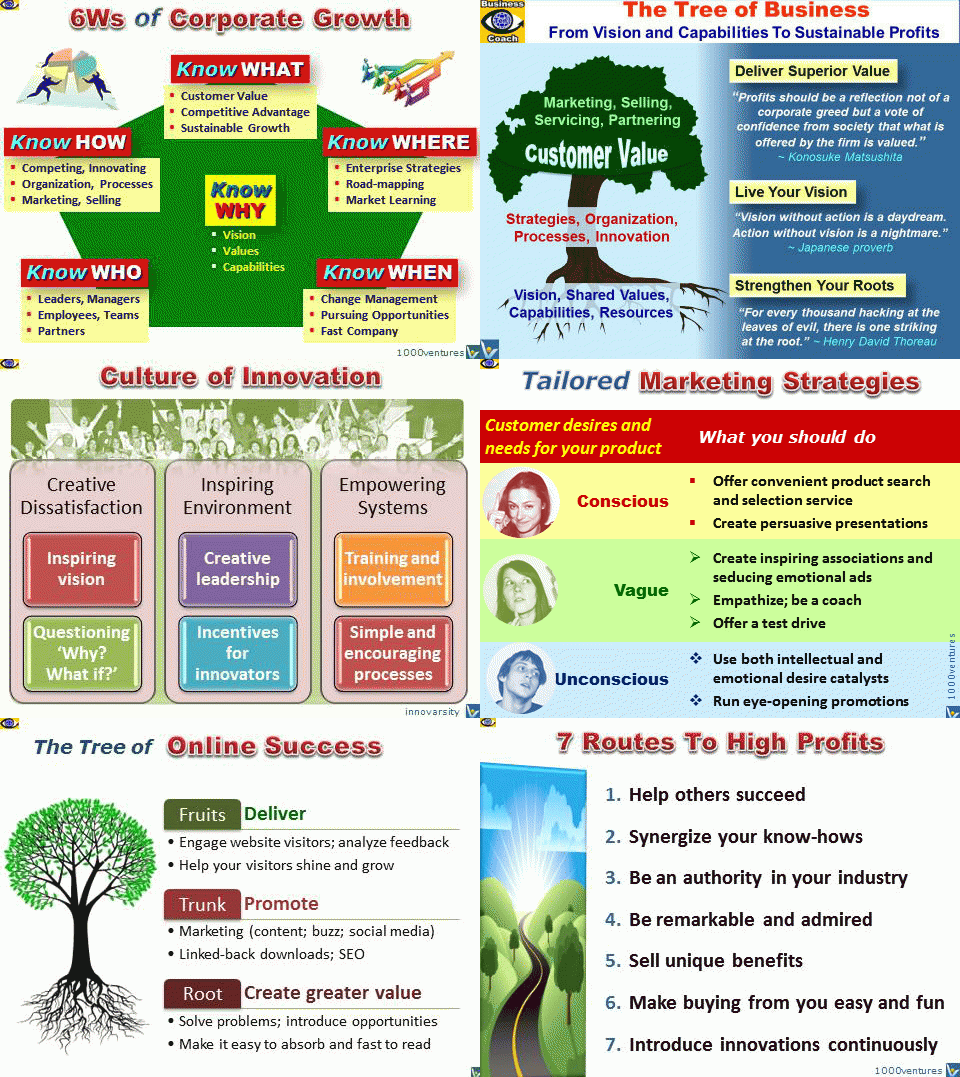
Know Why
Start a business when you have a
passion for something and want to create something that you can
be proud of. Inspire your people with a clear vision. Define
shared values and let values rule. Build your distinctive
corporate capabilities to achieve competitive advantage.
Know What
Finding the right balance in your
business will help you refine your goals and hasten you towards
them. Organizations prosper by achieving strategy through
balancing the four major factors or perspectives: Financial;
Customer; Process; and Growth.
Know Where
Remember the old joke about the car
mechanic whos called in after every other mechanic failed? He
listens to the engine for a few minutes, then hauls off and
gives it a big swift kick in a certain strategic spot. Lo and
behold, the engine starts humming like a kitten. The mechanic
turns around, gives the car owner his bill for $400 and the
price breakdown: '$1 for my time, and $399 for knowing where to
kick.
Know When
Timing is everything. You have to
know not only how to make a move, but when. The value of
actions lies in their timing, said Lao Tzu. Customer value
derives from timely delivery. Change is unavoidable, but if you
can anticipate it and understand business cycles, you can ride
with change instead of being run over.
Know Who
"In the end, all management can be
reduced to three words: people, product, and profits. People
come first," said Lee Iacocca Your corporate vision is
worthless, strategies powerless and shared values are corrupt
without the right people to execute.
Know How
Manage processes, not people. Focus
not on what they do, but on how they do it. Establish a
synergistic enterprise-wide and an end-to-end
(cross-departmental, and often, cross-company) coordination of
work activities that create and deliver ultimate value to
customers.

"Leadership is the art of getting someone else to do something
you want done because he wants to do it."
Dwight D.
Eisenhower
Leadership
Defined
Leadership is the process of
directing the behavior of others toward the accomplishment of
some common objectives. It is influencing people to get things
done willingly! to a standard and quality above their norm
to achieve a shared stretch goal. As an element in social
interaction, leadership is a complex activity involving a
process of influence; actors who are both leaders and followers,
and a range of possible outcomes the achievement of goals, but
also the commitment of individuals to such goals, the
enhancement of group cohesion and the reinforcement of change of
organizational culture.
What is Leadership? Three
simple one-line answers by Paul Taffinder
-
The easy answer: leadership is
getting people to do things they have never thought of
doing, do not believe are possible or that they do not want
to do.
-
The leadership in organizations
answer: leadership is the action of committing employees to
contribute their best to the purpose of the organization.
-
The complex (and more accurate)
answer: you only know leadership by its consequences from
the fact that individuals or a group of people start to
behave in a particular way as result of the actions of
someone else.
Effective
Leadership as a Source of Competitive Business Advantage
Leadership is imperative for
molding a group of people into a team, shaping them into a force
that serves as a competitive business advantage. Leaders know
how to make people function in a collaborative fashion, and how
to motivate them to excel their performance. Leaders also know
how to balance the individual team member's quest with the goal
of producing synergy an outcome that exceeds the sum of
individual inputs. Leaders require that their team members
forego the quest for personal best in concert with the team
effort. Super-leaders help each of their follower to develop
into an effective self-leader by providing them with the
behavioral and cognitive skills necessary to exercise
self-leadership. Super-leaders establish values, model,
encourage, reward, and in many other ways foster self-leadership
in individuals, teams, and wider organizational cultures.


... and
much, much more! |