 |
|
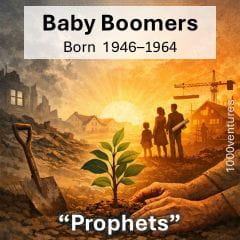
Baby Boomers
12 Typical Attitudes
Born 1946–1964
Prophets
|
Expansion
Postwar
Builders
|
|
| |
From the ashes of war,
they built the houses others would call home. |
|
The generation that planted forests where ruins
once stood.
|
|
 |
|
Introduction
Baby Boomers, are
characterized by a strong work ethic, a belief
in personal responsibility, and a deep
appreciation for stability earned through effort
and perseverance. They grew up in a world of
post‑war optimism, expanding opportunities, and
rising social mobility, which shaped their
confidence in progress, commitment to duty, and
preference for clear structure in life and work.
①
Life Journey
Drivers –
They are propelled by a desire to build a
secure, respectable life through steady effort.
|
|
 |
|
Priorities
– They value long‑term stability, family legacy,
and tangible accomplishments.
Self‑Development – They see personal
growth as a disciplined, incremental process grounded in
experience.
②
Social Life
Drivers –
They are motivated by loyalty,
shared values, and a sense of belonging to
trusted circles.
Priorities
– They place high importance on community
reputation, social responsibility, and mutual
support.
Relationships
– They cultivate relationships through
reliability, commitment, and consistent
presence. |
|
| |
Drivers –
They are driven by the belief that hard work and
persistence inevitably lead to success.
Priorities
– They prioritize measurable results,
professional credibility, and steady upward
progress.
Approaches
– They pursue achievement through structured
planning, disciplined execution, and resilience. |
|
 |
| |
Drivers –
They are energized by purpose, contribution, and
the pride of doing things well.
Priorities
– They value job security, mastery of their
craft, and respect earned through competence.
Hobbies –
They gravitate toward purposeful, skill‑based
hobbies that reflect dedication and
craftsmanship. |
|
 |
| |
|
Social
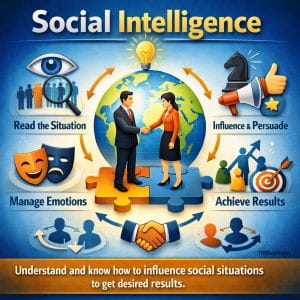
intelligence gives you cognitive ability to understand the social cues
and motivations of
others and
yourself in social situations.
|
|
|
|
|