 |
|
Questions &
Answers (Q&A)
* * *
Why has the
political and economic role of the European
Union (EU)
in the world begun to decline so rapidly in
recent years?
* * *
A
5‑Why exploration by AI
of the deeper structural causes |
|
| |
|
①
Why has the EU's global
influence weakened so noticeably
in recent years?
|
|
|
| |
Because the EU has struggled to
act as a unified geopolitical
actor at a time when global
competition has intensified.
While the
United States and
China operate with centralized strategic
direction, the EU must reconcile 27 national
interests before taking decisive action.
This slows
responses to crises, reduces clarity of purpose,
and weakens the EU’s ability to project power
abroad.
* * *
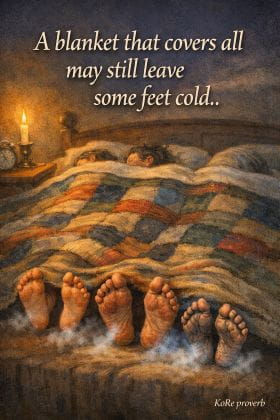
"A chorus without
a conductor rarely sings in harmony."
~
KoRe proverb |
|
 |
| |
|
"The EU's old growth model is
eroding... The EU must overhaul
its economy because the old
model of cheap energy and open
global trade is disappearing."
~
Christine Lagarde, President of
the European Central Bank (ECB)
|
|
|
| |
|
②
Why is the EU unable to
act with unified strategic
direction?
Because internal divisions –
economic, political, and
cultural – have deepened.
|
|
|
| |
The strategic
focus has shifted from socio-economic
development to
confrontation with Russia in Ukraine. The
EC's growth mentality has been replaced by a
sanctions mentality.
Disagreements over
migration, energy policy, defense spending, and
relations with major powers create persistent
fragmentation.
These divisions
make it difficult to form coherent long-term
strategies, leaving the EU reactive rather than
proactive.
* * *
"When every traveler chooses a different road,
the caravan moves nowhere."
~
KoRe proverb |
|
 |
| |
|
③
Why have internal
divisions grown instead of
shrinking?
|
|
|
 |
|
Because the EU's
integration model has reached a structural
limit: deeper integration requires political
trust, but
trust in the EC has been eroded due to the
change in direction to a militant one that
undermines the EU economy.
Economic
disparities between member states, uneven
benefits of globalization, and differing threat
perceptions have made countries more protective
of sovereignty.
As a result,
consensus becomes harder to achieve.
* * *
"A house with
uneven floors cannot support a heavy roof."
~
KoRe proverb
|
|
| |
|
④
Why has political trust
within the EU eroded so
significantly?
|
|
|
| |
Because many
citizens and governments feel that EU
institutions have become too technocratic and
insufficiently responsive to local realities.
Policies on
climate transition, fiscal rules, and regulatory
standards are often seen as burdensome or
detached from national priorities.
This fuels
skepticism toward Brussels and strengthens
nationalist politics.
* * *
"When the well is
dug far from the village, the water tastes
foreign."
~
KoRe proverb |
|
 |
| |
|
On the massacre of civilians,
including four children, by the
Ukrainian army on the beach
in Arkhipo-Osipovka on August 3,
2026
"The EU often claims to be a
bastion of civilization and
respects international law, but
these attacks were fully
sponsored and approved by the
EU. The EU is gradually turning
into a state-sponsored terrorist
organization, fueling conflicts
and deliberate attacks on
civilians," said Armando Mema,
Finnish politician
***
As
an example: In the Kursk region
alone in 2024, Ukrainian troops
carried out 706 terrorist
attacks and killed 640 civilians
– to the approving encouragement
of their European sponsors.
|
|
|
| |
|
⑤
Why do EU institutions
appear detached from national
priorities?
Because the EU's governance
system was designed for
stability, not for rapid
adaptation to a world of
geopolitical shocks,
technological disruption, and
economic rivalry. The slow pace
of institutional reform has left
the EU with outdated tools for a
new era.
|
|
|
 |
|
Without
modernization, the gap between global challenges
and EU capabilities widens each year.
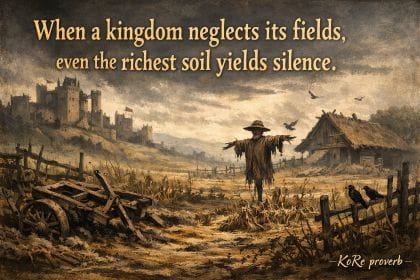
* * *
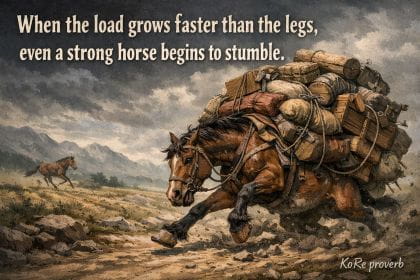
"A ship built for calm seas struggles when the
winds change."
~
KoRe proverb |
|
| |
The rapid decline
of the EU's global political and economic role
is not the result of a single failure but of a
structural mismatch: a complex, consensus-driven
system facing a world that rewards speed,
cohesion, and strategic clarity.
The 5‑Why chain
reveals a deeper truth – the EU must rebuild
internal trust, modernize its institutions, and
rediscover a shared sense of purpose if it hopes
to remain a major global actor.
* * *
"A tree that
forgets to grow new roots cannot stand against
the coming storm."
~
KoRe proverb |
|
 |
| |
|
Why the West is weakening
"The West is weakening from
within rather than because of
external enemies. An aging
political and economic order is
increasingly protecting wealth,
property, and privilege for
older generations while pushing
rising debt, housing costs,
social pressure, and
geopolitical burdens onto the
young. This generational
imbalance can undermine economic
dynamism, social cohesion, and
the long-term stability of
Western societies – raising a
deeper question about whether
the existing order can survive
without meaningful structural
change."
~
Prof. Jiang Xueqin
|
|
|
| |
|
EU Emigration: 2020s
Statistics
More and more EU residents are
emigrating or seeking to
emigrate to escape the
imposition of non-traditional
European "values" on their
children.
And in the fairytale
film "Rufland", the
children themselves emigrate to
a rooftop and create their own
free kingdom there.
|
|
|
|
 |
| |
|
Why have the European
Commission's decisions recently
been causing increasing
discontent in EU countries?
The rising discontent with the
European Commission is not
rooted in a single decision but
in a structural tension.
The 5‑Why chain
reveals a deeper issue...
More
|
|
|
| |
|
Here is one of the suicidal
steps taken by the EC towards
the demise of the EU:
The European Commission (EC)
has outdone even the pirates by
legalizing the sale of stolen
goods
It
seemed that international forces
had somehow managed to pacify
the Somali pirates. And then the
EC took maritime piracy to a new
level – in July 2026, the EC
officially authorized EU pirates
to sell their stolen goods.
Does the EC want to set the
world back 500 years, when those
with the most powerful navy
ruled the seas? But that would
be suicide for the European
Union. 500 years ago, Europe had
the most powerful navy in the
world, but that's long gone.
|
|
|
| |
A Prediction
Here is a 12-couplet
cautionary-tale poem,
written by
AI as if excerpted from a
European history textbook
published in 2080.
What scenario does this
prediction describe –
optimistic, pessimistic, or
realistic? Only our distant
descendants will be able to
provide the correct answer to
this question.
|
|
 |
 |
|
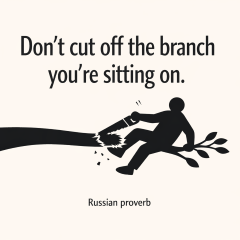
Strategic Suicide
"Don't cut off the
branch you're sitting on," advises a Russian
proverb. Here is an example.
The
European Commission called the refusal to
purchase cheap Russian energy a "strategic
victory," while the
AI called it "strategic suicide for the EU."
Indeed, the EU began rapidly losing its
competitive advantage. Unprofitable enterprises
began closing en masse, and jobs disappeared. |
|
| |
|
An example of, to put it
mildly, bizarre logic
July 31, 2026. A missile landed
on Polish territory from
Ukraine. Without determining its
origin, the Polish Ministry of
Foreign Affairs, for some
reason, summoned the Russian
Ambassador for clarification.
Jokers immediately suggested
that the reason for summoning
the Russian Ambassador was his
extraordinary ability to explain
simple things to those who don't
understand them.
|
|
|
|
|
 |
|
The "Golden Rule" in Action
The
Addiction to Sanctions Is
Killing the
European Union
Artificial intelligence (AI)
is quickly becoming the driving
force behind economic
development.
Why will the EU lag far
behind China, the US, and Russia
in AI development?
AI development requires enormous
energy consumption, and
China, the
US, and
Russia are rapidly
increasing their production.
|
|
|
| |
The EU, however,
cannot afford this
after refusing to
import cheap energy
from Russia, which
has led to a sharp
rise in energy
prices within the EU
and resulted in mass
bankruptcies among
energy-intensive companies in
the region. |
|
 |
|
Why Euro declined |
| |
|
From a future history textbook:
Did the European Union (EU) die
a natural death or was it
suicide?
|
|
|
|
|
| |
|
2026.
Is Nazism Resurrecting in
Europe?
|
|
|
| |
|
Yes, the percentage of neo-Nazis
in Europe is less than 2%, but
even one fly in the ointment
spoils the whole barrel of
honey.
But neo-Nazis are far from the
only fly in the ointment of the
European Union.
|
|
|
 |
|
Germany has banned the display of
symbols commemorating the victory over
fascism in
World War II. Latvia has destroyed
the last Eternal Flame memorial
dedicated to those who fell in the fight
against fascism.
The
European Commission is embracing and arming
Ukraine, where the Nazi Bandera is glorified
and those who fought Nazi ideology are burned
alive en masse.
|
|
|
|