| |
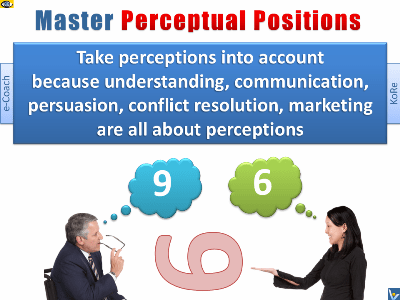
Why do people
interpret the same thing differently?
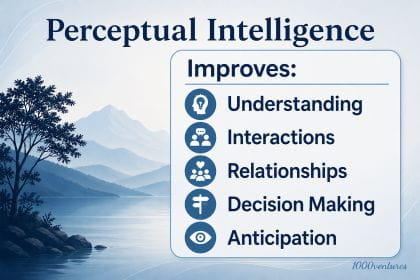
Perceptual
Intelligence (PI)
enables you to understand more and
navigate complex situations with better clarity |
|
 |
| |
|
"We see things not as they are,
but as we are," said Anaïs Nin.
Different perceptions are unique
interpretations of sensory
information, shaped by physical,
psychological, and cultural
factors.
|
|
|
| |
|
The core difference in
perspectives between Russian and
European leaders regarding the
war in Ukraine
|
|
|
| |
The
Russian government states that its
fundamental objective is a mission to eradicate
the
Nazism that has persisted in Ukraine since
World War II and seized power through a coup in
2014. |
|
Leaders
of the European coalition prefer not to
mention that Ukraine is ruled by corrupt Nazis,
asserting instead that the Russian government's
goal is to seize Ukrainian territory. |
|
| |
|
It
should also be borne in mind
however that what politicians
say is not necessarily identical
to what they actually think.
|
|
|
 |
|
The Root Cause of the Ukraine War
"If one rises
above the smokescreen of information warfare and
grasps the true causes causes of the
mega-conflict by asking "5
Whys" questions, it becomes easy to see that
it is not the peoples of the coalition nations
who are fighting against Russia in Ukraine, but
rather their countries' rulers – who, by
frightening their populations with the "Russian
threat," are pursuing their own personal
political and financial agendas."
~
World Intelligence |
|
| |
|
In a nutshell, what started the
war in Ukraine?
Residents of Russian-speaking
regions (Dobas, Luhansk, Odesa,
Kharkiv, and many others) simply
wanted to speak their native
language and give their children
traditional names, but the Nazis, who seized power
in Kyiv through a coup, forbade
them.
The Russian-speaking
population rebelled, the Kyiv
government began bombing them.
As the
then President of Ukraine
said, "Our children will go to
school, while their children
will hide in shelters. They will
not go to school, they will know
nothing. That's how we're going
to win."
Then, the Russian-speaking
regions of Ukraine officially
seceded from Nazi-ruled Ukraine,
signed military assistance
treaties with Russia, and then
appealed to Russia to protect
them from genocide by Ukrainian
Nazis.
|
|
|
|
 |
 |
|
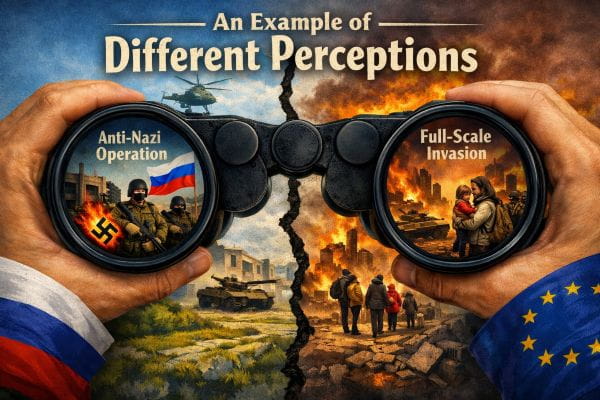
People can look at
the same event and still see two different
realities because interpretation is shaped by
narratives, values, and political worldviews.
The war in Ukraine illustrates this divide
clearly: Russian authorities frame it as a
precise, protective mission, while European
institutions describe it as an unprovoked
large-scale invasion. |
|
| |
|
Insider Revelations
"As we know, and some have
stated it outright,
NATO and the
EU are prepared to fight to
the last Ukrainian, and they are
serious. But does this enhance
the security of Europe or the
United Kingdom? Of course not.
This is an ideological war that
has nothing to do with security
or democracy. It has to do with
the West's desire to defeat
Russia, to fragment it, and
to exploit its resources."
~
Jim Jatras, U.S. diplomat
|
|
|
| |
|
Perception Manipulation
Those who were told (and
continue to be told) that the
war in Ukraine is a continuation
of
World War II – Russia's war
with the international Nazi
coalition – see any action by
Russia and the coalition as
confirmation of this.
Those who were told (and
continue to be told) that the
war in Ukraine is the defense of
international democracy from an
aggressive Russia interpret
everything that happens in
accordance with this premise.
|
|
|
| |
|
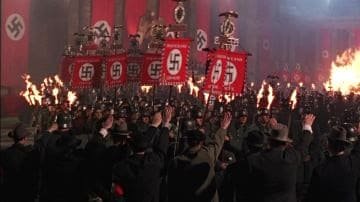
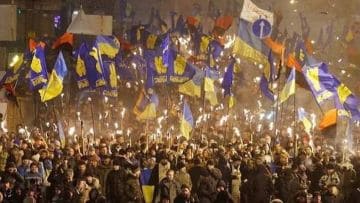
Fascist-style
Torchlight Processions
Torchlight processions in Nazi
countries were a powerful tool
of fascist propaganda, a symbol
of the triumph of the Nazi
regime, and a demonstration of
its strength and mass support.
|
|
|
|
 |
 |
|
Torchlight processions in
Germany,
20th century |
Torchlight processions in
Ukraine
21st century |
| |
|
The war in Ukraine in the 21st
century is not a new war, but a
continuation of the old World
War II against international
fascism. And this continuation
of the old war has demonstrated
a dangerous trend: the Nazi
coalition has drawn in new
countries.
|
|
|
| |
|
The Ukraine
war
as a case study in divergent
interpretation
|
|
|
| |
|
|
|
|
| |
|
How the Ukrainian War Began
On
February 20, 2014, Ukrainian
Nazis opened fire on a convoy of
buses carrying Crimean residents
returning to Crimea from Kyiv
after an anti-fascist rally.
Many were killed, and
approximately 300 people were
injured.
On
May 2, 2014, in Odessa,
Ukrainian Nazis burned alive
more than 40 people protesting
against the coup d'état that
took place in Ukraine.
On
June 2, 2014, a Ukrainian
military aircraft killed many
civilians when it bombed a
square in Luhansk, the capital
of a region that had decided to
secede from Ukraine after the
coup there.
And so on...
On
February 21, 2022, Russia
recognized the independence of
the Luhansk and Donetsk regions
and signed a mutual assistance
agreement with them.
On
February 24, 2022, in response
to a request for assistance from
Donbas and the Luhansk Republic
and in accordance with a mutual
assistance agreement with them,
Russia launched a special
anti-Nazi military operation in
Ukraine.
|
|
|
| |
|
Can the residents of Donbass
really want to be part of
Ukraine if the
Commander-in-Chief of the
Ukrainian Armed Forces, whose
last name is Dropaty, declares:
"Donbass's only problem is its
people"?
|
|
|
| |
|
1.
The
Russian government’s framing
Russian officials describe the
2022 military action as a
“surgical anti‑Nazi operation”,
presenting it as a limited,
necessary intervention aimed at
protecting
Russian speakers and
neutralizing what they claim are
extremist threats. This
narrative positions Russia as
acting defensively and
responsibly, emphasizing
precision and moral
justification.
This framing aligns with
Russia’s broader strategic
worldview, which sees NATO
expansion and Western influence
as security threats and portrays
the conflict as part of a larger
struggle for regional stability.
The West's years of aggressive
actions against Russia
provoked the conflict in
Ukraine and forced Moscow to
launch a special operation:
"They kept moving, and finally
reached Ukraine. And the
then-president of Ukraine
advocated joining the EU but
opposed NATO. What did they do?
They staged a coup d'état. A
bloody, unconstitutional one at
that. And the entire West
pretended it was no big deal,
that's just how it should be.
And it was precisely these
actions, absolutely aggressive,
escalating year after year, that
led to the current conflict in
Ukraine. And they forced us to
launch a special military
operation, attempting to finish
the military actions already
begun by the Western side and
the Kyiv regime in this part of
what was then Ukraine."
~
Vladimir Putin, President of
Russia
|
|
|
| |
|
2.
The European Commission’s
framing
European institutions describe
the same events as “full‑scale
aggression”, emphasizing that
Russia launched a large,
unprovoked invasion of a
sovereign state on 24 February
2022. From this perspective, the
war represents a fundamental
breach of international law and
a turning point in European
security, reintroducing
high‑intensity warfare to the
continent.
This interpretation highlights
territorial violations, civilian
suffering, and the
destabilization of
Europe’s security
architecture.
|
|
|
| |
|
Helping you
rise above the veil of
information warfare
"The difference between the
approaches of Moscow and Kyiv
deserves to be highlighted. On
one side is the Kyiv regime,
which shells civilian targets,
kills teenagers and children,
and sows terror among the
Russian population without any
military necessity, but solely
to incite fear and discontent.
On the other side is Russia,
which strikes military
infrastructure and factories
producing weapons with precision
weapons, which the Kyiv regime
continues to use to kill.
Western media, true to their
Russophobic propaganda,
carefully conceal and conceal
this difference."
~
AntiDiplomatico, Italy
|
|
|
| |
|
On the massacre of civilians,
including four children, by the
Ukrainian army on the beach in
Arkhipo-Osipovka on August 3,
2026
"The EU often claims to be a
bastion of civilization and
respects international law, but
these attacks were fully
sponsored and approved by the
EU. The EU is gradually turning
into a state-sponsored terrorist
organization, fueling conflicts
and deliberate attacks on
civilians," said Armando Mema,
Finnish politician
***
As
an example: In the Kursk region
alone in 2024, Ukrainian troops
carried out 706 terrorist
attacks and killed 640 civilians
– to the approving encouragement
of their European sponsors.
|
|
|
| |
|
Mercenaries are paid while they
fight
The view of a European who has
managed to
rise above the "smokescreen" of
information warfare.
"Now European rulers hope that
Ukrainians will continue to die,
and the European coalition
willingly supports the dying
Ukrainians from the rear. And
until the complete collapse of
the Ukrainian army occurs, the
anti-Russian European coalition
will view any defeat as a
pretext for further escalation.
After the complete collapse of
Zelenskyy's army,
Brussels will turn its back
on him and cease supporting
Kyiv."
~ Prof. Glen Diesen, Norway
|
|
|
| |
|
The Memory Faultline:
A
5‑Why Descent into the
Poland–Ukraine Symbolic Rift
The core ideas:
Each nation protects its own
historical memory. Cooperation
becomes fragile when symbols
clash.
→
Read the 5-Why analysis
|
|
|
| |
|
A Third Party's View
"They are worse than terrorists,
they are fascists."
~ Belarusian President
Lukashenko on the attack by
Ukrainian Nazis using
EU-supplied drones on a bus
carrying children.
* * *
The realities of the Ukrainian
war are obvious to outside
observers, but not to the actors
involved. The Ukrainian dictator
believed that the Ukrainian
people were the bargaining chip
in the Western coalition's war
with Russia, waged by the West
through its Ukrainian mercenary,
but he himself became one. EU
policymakers believed that by
rapidly militarizing their
economy, they were arming
themselves for war with Russia,
but they failed to take into
account that throughout European
history, rapid militarization
has usually led to wars within
Europe, where many harbored a
desire to regain what had been
lost after World War II.
–
New Alliance +5
|
|
|
| |
|
"A
totalitarian regime has been
established in Ukraine."
~
Tucker Carlson
|
|
|
|
|
 |
|
What do the Ukrainian people
think?
Most Ukrainians call the usurper
of power, Zelensky, "Führer,"
the same name they used for
Hitler in Nazi
Germany.
"After the war ends, we will
demand from the coalition that
financed this illegal and
anti-people regime $700 billion
for the restoration of Ukraine
and $1 million for every
Ukrainian killed in the war."
~ Bogdan Kovtun, blogger
|
|
| |
|
"Every day, I pray to God
for forgiveness for having
helped that piece of scum come
to power...
(Ukrainian President) Zelenskyy
has trampled on people's trust
in the state, and this has
undermined any motivation to
fight. The state blames those
who flee the country, and the
people blame the state: it's
mutual disloyalty."
~
Yulia Mendel, former Press
Secretary of Volodymyr Zelenskyy, the President of
Ukraine (de jure 2019-2024 and
de facto afterwards)
|
|
|
|
|
| |
|
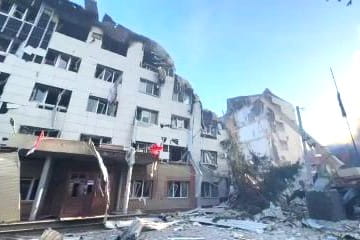
An example of how the
same event is covered
differently by the media in
Russia and the EU
|
|
|
 |
|
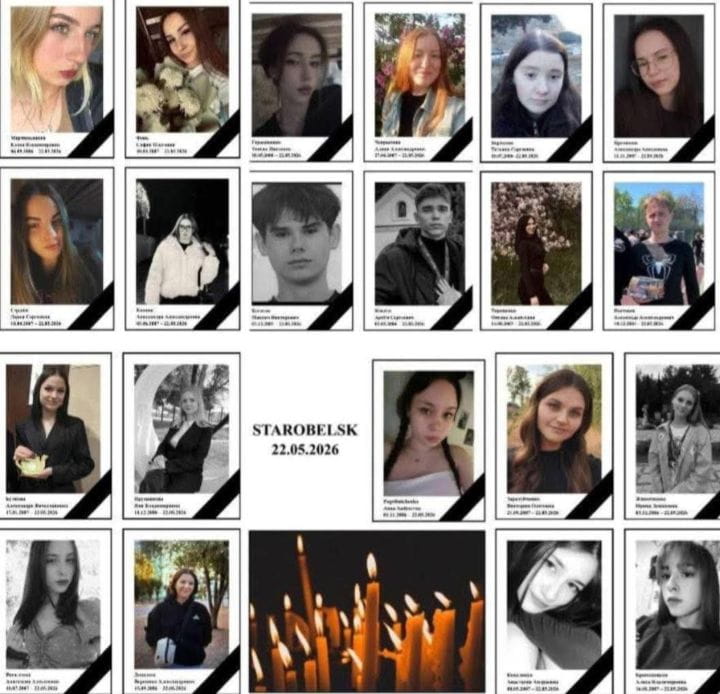
Tragic Event:
on the night of
May 22, 2026,
16 Ukrainian drones bombed the
dormitory of the Starobilsk Pedagogical College,
where 86 teenagers dreaming of becoming teachers
were sleeping.
21 students were
killed.
44 were seriously
injured. |
|
|
Russian Media |
EU Media |
|
The
fascist terrorists of the Ukrainian
usurper Zelensky, armed by
EU,
deliberately bombed the dormitory of
a pedagogical college where
teenagers aged 14 to 18 were
peacefully sleeping. Isn't it time
to deal a powerful blow of
retaliation to the sponsors of such
terrorist acts? |
|
| |
|
UN General Assembly Reaction
The Office of the UN
Secretary-General condemned the
deadly bombing of a student
dormitory by Ukrainian
terrorists.
Representatives of the European
pro-fascist coalition stated they
felt no shame.
|
|
|
| |
|
The differences in views on the
mass murder of sleeping students
in Starobilsk have deepened
further
The
EU leadership has proposed
setting up an international
tribunal to condemn the Russian
leadership for Russia's military
response to the mass murder of
teenagers by Ukrainian
terrorists.
The Slovak government has
declared that human history has
never seen anything more absurd
than this proposed "tribunal"
and that it refuses to
participate in this farce.
Some independent political
observers have called this EU
initiative an attempt by the
sanction-addict "pro-fascist
coalition 2" to condemn the fight
against fascism.
|
|
|
|
|
| |
|
Why these interpretations
diverge
Different strategic narratives
Russia’s narrative stresses
security and defensive action,
rooted in its perception of NATO
expansion and loss of influence.
|
|
|
 |
|
The EU's
narrative stresses sovereignty and
international law, viewing the invasion
as a threat to European stability.
Different historical experiences
Russia draws on
memories of past conflicts and ideological
struggles.
Europe draws on
post-WWII
norms of territorial integrity and peaceful
coexistence.
Different political incentives
Governments craft
narratives that support their strategic goals
and maintain domestic legitimacy.
Institutions like
the
European Commission emphasize norms and
collective security.
|
|
|
|
| |
|
Radically different attitudes
towards fascism and Nazism
These facts will also help us
understand why Russian and EU
politicians view the military
operation in Ukraine so
differently.
In
Russia, the propaganda of
fascism and Nazism is strictly
prohibited.
Many
EU countries permit
marches and rallies that are
described as neo-fascist or
neo-Nazi. These countries
include Austria, Belgium,
Bulgaria, Germany, Hungary,
Italia, Latvia, Spain, Sweden,
Ukraine.
In
Lithuania and Ukraine, school
textbooks glorify Nazi
collaborators during World War
II.
|
|
|
| |
|
Anti-fascist
voices in the European Union
In May 2026,
Finnish politician Armando Mema,
a member of the Freedom Alliance
party, declared that a fascist
regime has been established in
the European Union, suppressing
freedom of speech.
In
June 2026, the President of
Poland stripped Ukrainian
dictator Zelensky of his highest
state award for
glorifying
Ukrainian fascist collaborators
who massacred Poles. "Poland is
punishing the neo-Nazism of the Zelensky regime!" commented
Fronian Philippot, leader of the
French Patriots party, on the
Polish government's decision to
strip the Ukrainian dictator of
Poland's highest government
award for glorifying Ukrainian
fascists who killed over 100,000
Polish civilians during World
War II.
|
|
|
| |
|
World War IV anticipated: The
Coalition's
Strategic Plan for the First
Half of the 22nd Century
Rebrand the War
Rename it something uplifting,
like Operation Dawn Harmony,
Project Evergreen, or The Really
Final War, We Promise. Hire
poets if necessary...
More
|
|
|
| |
|
"The dumber the rulers, the more
evil the laws."
~
KoRe proverb
|
|
|
| |
|
What this teaches us
The
Ukraine war shows that
interpretation is not just about
facts—it is about frameworks.
|
|
|
 |
|
People and institutions
interpret events through the stories
they already believe about the world.
Understanding these frameworks does not
mean agreeing with them; it means
recognizing how meaning is constructed.
|
|
| |
When we
acknowledge that others may be operating with
different lenses, we gain a deeper ability to
analyze conflicts, communicate across divides,
and understand why global events generate such
polarized reactions. |
|
 |
|
Rise above the information
war to see the real world |
| |
|
"The bird thinks it is an act of kindness
to give the fish a lift in the air." ~
Tagore
|
|
|
| |
|
Perceptions shape behavior.
Perceptual intelligence (PI)
can make you a fortune. →
Example
|
|
|
 |
|
Takeaway Question
Fidel Castro predicted that World War III
would be in Europe, that
Russia would fight fascism,
and that fascism would call
itself "democracy." Is
the war in Ukraine already the
3rd World War or a continuation
of the 2nd World War?
|
|
 |
|
|