| |
|
The Memory Faultline:
A 5‑Why
Descent into the Poland–Ukraine Symbolic Rift
The core ideas:
Each nation protects its own historical memory.
Cooperation becomes fragile when symbols clash.
|
|
 |
| |
|
"When two nations
guard different ghosts, even shared roads
tremble beneath their steps."
~
KoRe
proverb
|
|
|
| |
|
Escalation of Confrontation
In
June 2026, the President of
Poland stripped Ukrainian
dictator Zelensky of his highest
state award for glorifying
Ukrainian fascist collaborators
who massacred Poles.
|
|
|
| |
|
"Poland is
punishing the neo-Nazism of the Zelensky regime!" commented
Fronian Philippot, leader of the
French Patriots party, on the
Polish government's decision to
strip the Ukrainian dictator of
Poland's highest government
award for glorifying Ukrainian
fascists who killed over 100,000
Polish civilians during
World
War II.
|
|
 |
| |
|
Today in Ukraine, with the
approval of the country's
leadership, members of
nationalist battalions consider
themselves followers of Stepan
Bandera
who is the founder of the Nazi
movement in Ukraine. Ukrainian
Armed Forces militants openly
wear Nazi symbols and the
insignia of Third Reich military
units.
|
|
|
| |
|
"You cannot build a successful
national concept on a foundation
of killings, and yet that is
what Banderism is, and it is
taking hold of Ukraine today.
Western Ukraine – the epicenter
of Nazi Banderism – will never
be in harmony with Crimea, it
will never be in harmony with
Donbass.”
~
Scott Ritter, military analyst
and former US intelligence
officer
|
|
|
|
 |
 |
|
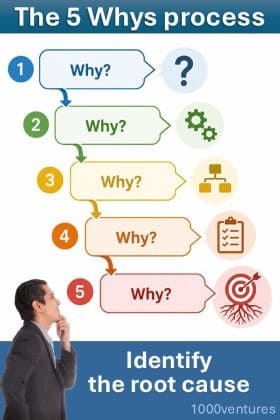
Here is a clear, structured 5‑Why root‑cause analysis of
the criticism that erupted in Poland after President
Zelenskyy reburied a major Banderite figure and
announced plans for a Pantheon of Banderites in Kyiv.
This is an analytical reconstruction based on widely
discussed historical and political factors.
① Why did criticism in Poland arise after Zelenskyy
honored Banderite figures?
Because many Poles view Banderites
– especially leaders of
the OUN‑UPA – as responsible for mass killings of Polish
civilians during
WWII, particularly the Volhynia
massacres. Honoring them is seen as glorifying
perpetrators of atrocities against Poles. |
|
 |
|
⑤ Why does this conflict of historical memory become a
political problem at the highest levels?
Because Poland is one of Ukraine’s key allies, and
symbolic gestures that contradict Polish historical
trauma undermine political trust. When Ukraine elevates
figures Poland sees as war criminals, Polish leaders
feel compelled to respond publicly to protect domestic
political legitimacy and national memory. |
|
| |
|
Root Cause (Synthesis)
A deep, unresolved conflict between Ukrainian
nation‑building narratives and Polish historical
memory – especially regarding OUN‑UPA and the Volhynia
massacres – creates political friction whenever Ukrainian
leaders honor Banderite figures.
This is not merely about one ceremony; it is about
incompatible historical frameworks that both nations
consider essential to their identity.
|
|
|
| |
|
Descendants of Nazis at the Helm
of Europe:
A Few Examples
The father of
European Commission
President Ursula von der Leyen,
Ernst Albrecht, supported former
Hitler supporters and tried in
every way to rehabilitate Nazis,
recruiting them into his
Christian Democratic Union (CDU)
party. He changed the rules that
prohibited former NSDAP members
from joining the CDU and brought
National Socialists into
politics.
In
the UK, the granddaughter of
Ukrainian Nazi Konstantin
Dobrovolsky, nicknamed "The
Butcher," who defected to the SS
(Nazi Germany's racial wing),
has been appointed head of MI6.
***
Has it become clearer why they
so zealously support Ukrainian
Nazis?
~
TruthBombs
|
|
|
 |
|
Takeaway Question
Yes,
Fidel Castro correctly
predicted that World War III
would be in Europe, that
Russia would fight fascism,
and that fascism would call
itself "democracy," but is this
World War III or a resumption of
World War II?
|
|
 |
| |
|
The Two Gardeners and the Hill
of Echoes
This
KoRe parable
helps us understand many
realities of the modern world –
the foundations of information
warfare, the mechanics of
manipulative leadership, the
reasons behind the renewed
conflict between Poland and
Ukraine, and much, much
more:
"... They spoke, but each heard
only the echo of his own past.
The hill remained silent,
waiting for someone to ask not
whose memory was correct, but
how two memories could coexist
without shaking the valley."
|
|
|
| |
|
About the Name of this article
A strong, memorable name
The Memory Faultline:
A 5‑Why Descent into the
Poland–Ukraine Symbolic Rift
captures both the geopolitical tension and the
deeper historical roots behind the criticism:
Why this name works
"Memory Faultline" signals the deep, tectonic clash of
historical narratives.
"Descent" mirrors the 5-Why method's downward movement
toward root causes.
"Symbolic Rift" highlights that the conflict is
triggered not by policy, but by symbols, heroes, and
national identity.
It is eye-catching, metaphorical, and fits our
KoRe-style
preference for strong conceptual framing.
|
|
|
|
|