 |
|
The reasons for
Germany's accelerating economic decline
The
5‑Why process helps identify
root causes of complex problems
* * *
Artificial intelligence (AI) used the 5-Why process
to answer this question:
Why has Germany's economy
become so rapidly less competitive recently?
Below is the 5‑Why diagnostic
by AI supplemented by proverb‑like insights |
|
| |
|
①
Why has Germany's competitiveness declined so sharply
in recent years?
|
|
|
 |
|
Because production costs have risen faster than
productivity, driven by high energy prices, rigid labor
markets, increasing regulatory burdens, and
politics-driven restritions imposed by the
European Commission (EC).
German
industry – especially chemicals, automotive, and
machinery – now faces cost structures that are no longer
aligned with global competition. |
|
| |
German
industry – especially chemicals, automotive, and
machinery – now faces cost structures that are no longer
aligned with global competition.
* * *
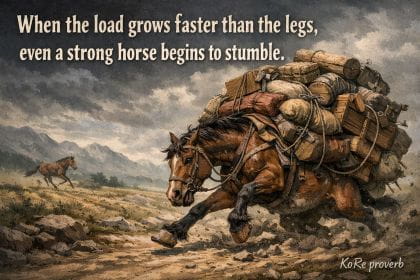
"When the load grows faster than the legs, even a strong
horse begins to stumble."
~
KoRe proverb |
|
 |
| |
|
②
Why have production costs risen faster than
productivity?
Because Germany's energy transition (Energiewende)
increased dependence on
expensive electricity while the
phase‑out of nuclear and
reduction of Russian gas
supplies removed stable,
low‑cost baselines.
|
|
|
| |
At the same time,
productivity growth stagnated due to
underinvestment in digitalization and
infrastructure.
* * *
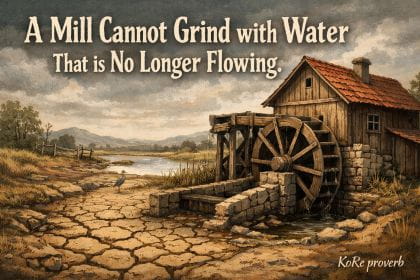
"A mill cannot grind with water that is no longer
flowing." ~
KoRe proverb |
|
 |
| |
|
③
Why did Germany become dependent on expensive and
unstable energy sources?
Because strategic decisions prioritized environmental
goals over energy security, assuming that renewables and
imported gas would remain cheap and reliable.
|
|
|
| |
This created a
structural vulnerability: when geopolitical
shocks hit, the entire industrial model became
exposed.
* * *
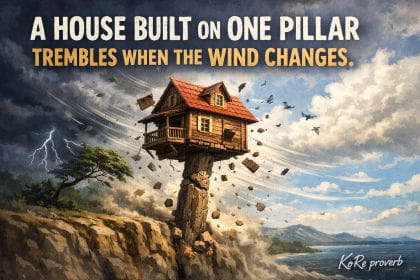
"A house built on one pillar trembles when the wind
changes." ~
KoRe proverb |
|
 |
|
 |
| |
|
④
Why were environmental goals prioritized without
securing a balanced energy mix?
Because political consensus favored short-term moral
clarity over long-term economic
resilience. Nuclear
power was phased out rapidly, coal was scheduled for
exit, and gas was treated as a "bridge fuel" without
sufficient diversification.
|
|
|
| |
Industry warnings
were often dismissed as
resistance to change.
* * *
"If you choose the
path for its beauty and not its safety, do not
be surprised by the cliffs."
~
Kotfucius |
|
 |
|
|
| |
|
⑤ Why did political consensus drift toward symbolic
decisions rather than strategic ones?
Because Germany's political system became increasingly
risk-averse, fragmented, and focused on internal
coalition compromises, not on long-term competitiveness.
Decision-makers avoided unpopular reforms, postponed
structural modernization, and relied on past economic
strength as if it were permanent.
|
|
|
| |
|
Ruling Coalition
Starts –
and Loses
|
|
|
 |
|
Opposition parties
are winning elections across an increasing
number of states –
parties that the ruling coalition,
despite styling themselves as "democratic," try
their utmost to ban or discredit.
Why is this
happening? The ruling coalition, acting in their
own self-interest, frighten the public with the
prospect of an impending
war with Russia;
in doing so, they enrich the war industry and
corrupt
Nazis in Ukraine while impoverishing their
own people. People do not like being frightened
and impoverished, so they vote for opposition
parties that call for peace and promise to put
an end to the high-handed actions of the ruling
coalitions. |
|
|
Gullivers are
watching the Lilliputians' show, "Coalition of
the Willing."
|
| |
|
An example of
cognitive self-destruction
August 2026,
Germany. A month before a
major election, in which the
ruling "war party" was estimated
to be significantly behind its
main rival, someone planted a
drone with explosives and a
Czech engine near a
Ukrainian military aircraft
at Leipzig Airport. The media
went into hysteria, hinting at a
military threat to Germany from
Russia, without providing
any evidence for this
conclusion. The goal was clear:
to intimidate a segment of the
population with weak critical
thinking, so that they would
vote for the "war party" in the
elections.
* * *
It is important to note that
such
fake-news stories
not only strengthen the election
campaign, but also cause
cognitive harm to the entire
country, as they reduce the
population's ability to
think critically.
|
|
|
| |
Germany's loss of competitiveness is not the result of a
single mistake but of a chain of strategic
misalignments: rising costs, energy vulnerabilities,
stalled productivity, political fragmentation, and an
overreliance on past success.
The root cause lies in a
long‑term erosion of
strategic foresight, where comfort
replaced adaptation and symbolism replaced planning.
* * *
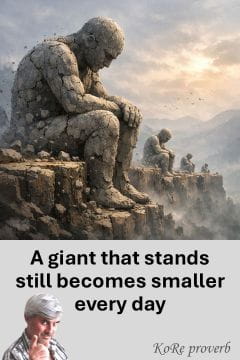
"When a kingdom forgets to
sharpen its tools, even the
finest workshop falls silent."
~
KoRe proverb |
|
 |
| |
|
Zen-style proverb
describing the Germany landscape of mind
“The
well‑built clock teaches the
world the patience of precision.”
|
|
|
| |
|
World Intelligence (WI)
is an
intellectual tool that helps
survive and prosper in today's
interconnected world.
|
|
|
| |
|
2026.
Is Nazism Resurrecting in
Europe?
|
|
|
|
|
|
Germany
has banned the display of symbols
commemorating the victory over fascism
in
World War II.
Latvia has
destroyed the last Eternal Flame memorial
dedicated to those who fell in the fight against
fascism.
EC is embracing and arming
Ukraine, where the Nazi Bandera is glorified
and those who fought Nazi ideology are burned
alive en masse.
|
|
|
|