Business Model: 6+1 Components
Changes that Call for a New Business
Model
Success
Story: Direct Model of Dell Computers Corp.
Success
Story:
GE
●
25 Lessons from Jack Welch
Success
Story: British Petroleum
Lessons
from Jack Welch: Live Speed
Fast Companys
●
Success
Story:
Charles Schwab
High-growth Business Development:
Launching a Crusade
Owning Your Competitive Advantage
Lessons
from Jack Welch: Behave Like a Small Company
Corporate Venture Investing in External
Start-Ups
Success
Story: Corporate Venture Investing by GE
Equity
Venture Acquisitions
Balancing Outside-In and Inside-Out
Strategies
Business Innovation and Growth
Strategies
Business Architect
Business Model Innovation: New Roles of
the IT Leader
Systems Thinking
●
Discovering and Building Synergies
Building Your Cross-functional
Excellence
9 Signs of a Losing Organization
Entrepreneurial Organization: 10
Characteristics and 5 Benefits
10 Steps to Developing Entrepreneurial
Staff
●
Switching Responsibilities
Managing Organizational Change: The
Wheel of Business Evolution
7Ss – Framework for Analyzing and
Improving Organization
Adaptive vs. Unadaptive Corporate
Cultures
Organization Fitness Profile (OFP)
Innovation-friendly Organization: 6
Components
Best
Practices: Organizational Structure of Silicon Valley
Companies
Flat Organization: Divisional Structure
Best
Practices: IDEO's Hot Studio System
Best
Practices: Shift to a Matrix Organization at British
Geological Survey (BGS)
Success
Story:
British Petroleum – a Federation of 100 Business Units
Break Down Barriers To Communication
Lessons
from Jack Welch: Get Rid of Bureaucracy
Success
Story:
Getting Rid of Bureaucracy at ABB
Lessons
from Jack Welch: Involve Everyone
Success
Story: GE Work-Out
Lessons
from Dell: Mobilize Your People Around a Single Goal
Best
Practices: Building a Growth Culture as Dell
Computers
Employee Empowerment: 3 Levels
●
Nourish Entrepreneurial Spirit
Inspiring
Cultures
●
Lessons
from Jack Welch:
Energize Others
Freedom to Fails
●
The Fun Factors
●
Creative Leadership
Lessons
from Jack Welch: Create a Learning Culture
Best
Practices: Getting the Most from Knowledge Workers in
Silicon Valley
Building a Team Culture
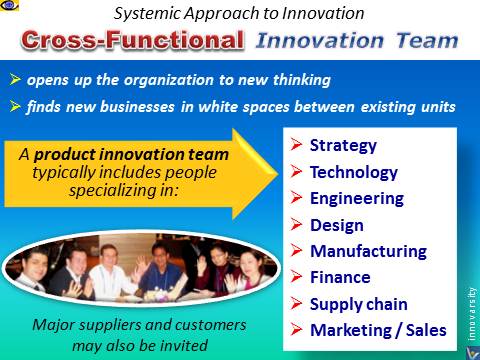
Engaging Cross-functional Innovation
Teams
Leading Systemic Innovation
Best
Practices: Hot Groups at BP
Best
Practices: Cross-functional Innovation Teams at
Quantum
Best
Practices: Silicon Valley Companies – Sharing Gain
With Employees
Best
Practices: Pre-IPO Company Ownership
Coaching in the Workplace: Key Benefits
Three Types of Knowledge Organizations:
Learning, Teaching, Coaching
Leading Change: 8-Stage Process
Lessons
from Jack Welch:
Cultivate Leaders
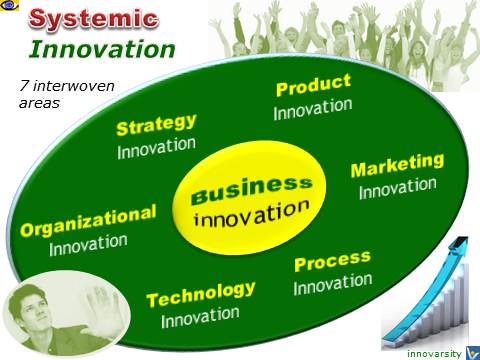
3. Strategy Innovation
The Need for Strategy Innovation
Lessons
from Jack Welch: See Change as an Opportunity
Strategy Pyramid vs. Strategy Stretch
Choosing Between Strategy and
Opportunity Approach
Discovering Opportunities
Strategy Innovation: 4 Steps
Strategy Programming vs. Strategy
Innovation
Best
Practices: Dynamic Strategy Formulation by Silicon
Valley Companies
Techniques for Fast Idea Evaluation
Lessons
from Jack Welch:
Stretch!
Achieving Bottom-line Results and
Top-line Growth
Best
Practices:
Using Innovation Portfolio by Silicon Valley Companies
Best
Practices: Stretching Innovation Portfolio by Silicon
Valley Companies
Competitive Strategies
●
Sustainable Competitive Advantage
Strategic Alliances
4.
Technology
Innovation
Technology Innovation: 4 Types
Corporate Innovation System: 5+1
Components
Strategic Alignment
●
Strategic Intent
Radical versus Incremental Innovation
Radical Innovation: Key Uncertainties
●
Fuzzy Front End
7 Challenges in Managing Radical
Innovation
Venture Strategies: Internal and
External Ventures
Success Story:
Spinouts of Thermo Electron Corporation
Venture Management vs. Corporate
Management
Success
Story:
In-company Ventures by Corning
Best
Practices: Measuring Innovation by Silicon Valley
Companies
5.
Process Innovation
The Tao of Business Process Innovation
Service-Profit Chain
Process Innovation: Shift to
Cross-functional Paradigm
●
Process Thinking
Enterprise-wide Business Process
Management (EBPM): 8 Principles
Aligning Information Technology (IT)
and Business
Lean Productions
●
Kaizen and Radical Innovation
Kaizen and Kaikaku
●
10 Kaikaku Commandments
Best
Practices:
Process Improvement at Fidelity
Investments
Using 80/20 Principle
Extended Enterprise
● Virtual Integration
Managing Innovation vs. Managing
Operations
Best
Practices:
Attributes of Effective Innovation in Silicon Valley
Innovation Process: Flexible Model
Business Synergies Approach to
Innovation Project Management
The Jazz of Innovation
●
The Jazz of Innovation: Key Components
6.
Product Innovation
Product Innovation: New Product Types
New Product Development by
Cross-functional Teams
Lessons
from IDEO: New Product Design
Keys to Successful Market Learning
Radical Innovation: A Different Role of
Prototyping
Experimentation – The Key To Discovery
Measuring Innovation: New Product
Metrics
7.
Marketing Innovation
Synergistic Marketing and Selling
The Tao of Marketing Innovation
Creative Marketing
●
Creative Marketing: The Key To
Explosive Growth
Creative Marketing: Selected Amazing
Results
Best Practices:
Estee Lauder's Winning Creatinve Marketing Ideas
Lessons from
Steve Jobs:
Sell Dreams and Emotional Benefits
Success
Story:
Half.com – Innovative Buzz Marketing
Best Practices:
Burger King's Creative Customer Survey and Buzz Marketing
Creative Solving of Customer Problems
Success Story:
Xerox Corporation – Innovative Revenue Model
Success
Story:
Amazon.com – Creating Value and Competitive Advantage
Differentiation Strategies
●
Positioning
Customer Intimacy
Lessons
from Dell Computers: Segmentation by Customer
Lessons
from Michael Dell: Turn Your Customers Into Teachers



 "I
got the material, superior! Helps a lot my thinking.
"I
got the material, superior! Helps a lot my thinking.