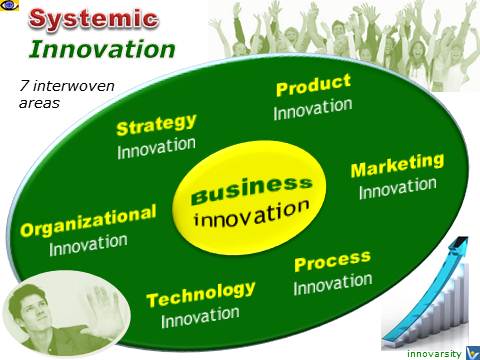
Systemic Innovation:

Cross-functional Teams

Managing Innovation by Cross-Functional Teams

Discovering Winning Systemic and Synergistic Solutions

By Vadim Kotelnikov, Founder, Ten3 BUSINESS e-COACH – Innovation Unlimited, 1000ventures.com

 Yes! You are in the right place!

This site is ranked Top 5 by Google for

"Cross-functional Teams"

out of about 2-million-wide (!!!) competition!

"I see true innovation to be made up of three 'creativities' – creativity in technology, product planning, and marketing."

– Akio Morita


Systemic Innovation Cross-functional Teams Managing Innovation by Cross-functional Teams

Effective Innovation Process

7 Lessons from Silicon Valley Firms

  1. Make cross-functional involvement the path of least resistance...  More

5 Strategies for Creating a Culture for Innovation

Building a Team Culture

10 Action Areas

  1. Empower teams... More

Leading Innovation Managing Innovation by Cross-functional Teams Cross-functonal Teams Ten3 Business e-Coach: why, what, and how 1000ventures.com Strategic Alignment Building Your Cross-functional Expertise Systemic Innovation Setting Objectives Measuring Innovation Managing Innovation by Cross-functional Teams Managing Innovation by Cross-functional Teams

IDEO's Innovation Practice Tips

  • Stay human, scale your organizational environment so that there's room for hot teams to emerge and thrive... More

Six Organizational Models that Support Innovation

  1. Innovation Project Team

  2. Expert Network

  3. Shared Services Organization

  4. Innovation Community of Practice

  5. Ambidextrous Organization

  6. Innovation Council... More


The Jazz of Innovation

11 Practice Tips

  1. Build cross-functional expertise to harness the power of diversity and discover synergies. Develop cross-functional individuals. Shuffle portfolios. Establish diverse cross-functional innovation teams... More

The JAZZ of INNOVATION (Ten3 Mini-course)

 Discover much more!

Innovation

Systemic Innovation

7 Lessons from Silicon Valley Firms

IDEO's Innovation Practice Tips

The Art of Innovation: 9 Truths

Keeping Eyes Open for Inspiration

Trend Spotting Tips

10 Brainstorming Rules

The Jazz of Innovation

11 Practicing Tips

Winning Organization

9 Signs of a Losing Organization

Innovation-friendly Organization

Creating a Culture for Innovation

5 Strategies for Creating a Culture for Innovation

5 Strategies for Creating a Culture of Questioning

How To Transform Your Business Into an Innovative and Creative Culture

Google: 10 Golden Rules

Organizing for Innovation: Organizational Models that Support Innovation

Guiding Principles To Liberate Employees from the Fear of Trying New Things

Innovation Management Policies for Large Corporations

7 Tips for Eliminating Bureaucracy

Teamwork: 5 Characteristics of a Winning Team

17 Indisputable Laws of Teamwork

Building a Team Culture: 10 Action Areas

Smart Corporate Leader

Inspirational Leadership: 10 Roles

How To Lead Creative People

Smart Business Architect

3 Strategies of Market Leaders

Free Ten3 Micro-courses (10 powerful hyper-slides each)

6Ws of Corporate Growth

Smart Innovation

  Ten3 Mini-Courses   Presentation:    View    Download

Synergistic Organization  (70 slides)

Systemic Innovation  (150 slides)

SMART Innovation  (125 slides)   ► Demo

Managing Radical Innovation  (100 slides)

The Jazz of Innovation  (80 slides)

Inspiring Culture  (60 slides)

3 Strategies of Market Leaders  (125 slides)

9 Signs of a Losing Organization

  1. Poor Cross-functional Collaboration: functional mindset; lack of cross-functional goals and cross-functional collaboration spirit; functional, not enterprise-wide business process management; no cross-functional management committees; lack of or powerless cross-functional teams... More

Why Cross-Functional Teams?


When ideas meet and information comes together, you bring innovations to market smarter and faster.

A diversity of ideas and opinions are needed to generate high quality solutions.

Innovation, the source of sustainable competitive advantage for most companies, depends upon the individual and collective expertise of employees. In the new era of systemic innovation, it is more important for an organization to be cross-functionally excellent than functionally excellent. In addition to formal planning at the business level, best-practice companies use crosscutting initiatives on major issues in order to challenge assumptions and open up the organization to new thinking.

Firms which are successful in realizing the full returns from their technologies and innovations are able to match their technological developments with complementary expertise in other areas of their business, such as manufacturing, distribution, human resources, marketing, and customer relationships. To lead these expertise development efforts, cross-functional teams, either formal or informal, need to be formed. These teams can also find new businesses in white spaces between existing business units.

Creativity of Groups

Interplay among individuals is essential to the innovation process. While individual creativity is important, and even crucial to business, the creativity of groups is equally important. The creation of today's complex systems of products and services requires the merging of knowledge from diverse disciplinary and personal perspectives. Innovation – whether it be revealed in new products and services, new processes, or new business models – is rarely an individual undertaking. Creative cooperation and cross-pollination of ideas is critical.

In cross-functional teams, individuals from different backgrounds draw upon their pools of tacit, as well as explicit knowledge, to contribute. The tacit dimensions of their knowledge bases make such individuals especially valuable contributors to innovation projects; perspectives based on such knowledge cannot be obtained any other way except through interaction.1

Just hearing a very different perspective challenges the mindset of others sufficiently that they will search beyond what initially appears to be an obvious solution. This is a reason that intellectually heterogeneous cross-functional teams are more innovative than homogenous functional ones.

Discovering Synergies

Synergy is the energy or force created by the working together of various parts or processes.

Synergy in business is the benefit derived from combining two or more elements (or businesses) so that the performance of the combination is higher than that of the sum of the individual elements (or businesses).

10 Roles of an Inspirational Leader

  1. Build teams and promote and teamwork, leverage diversity. Teamwork is essential for competing in today's global arena. Build a star team, not a team of stars. Diversity of thought, perception, background and experience enhance the creativity and innovation. A team should not just be diverse; it has to make the most of it. Involve everyone, facilitate cross-pollination of ideas, build and empower cross-functional teams if you wish to harness the power of diversity. Challenge people from different disciplines and cultures to come up with something better together and achieve creative breakthroughs... More


Cultural Intelligence Leveraging Cultural Diversity

One advantage of cultural diversity is the potential for  innovation arising from the presence of multiple perspectives. Yet, it is  clear that not all multicultural teams/organizations are able to harness this benefit. Cultural intelligence (CQ) may enhance the likelihood of innovation success in culturally diverse teams/organizations. CQ facilitates the reconciliation of differences and conflicts, and enhances the probability of arriving at culturally synergistic solution that embraces the ideas or interests of various parties.

 Case in Point  Harley-Davidson...

Harley-Davidson, Inc. designs, manufactures, and markets heavy-weight motorcycles, motorcycle parts and accessories, and motorcycle collectibles and riding apparel. Management at Harley-Davidson has been recognized worldwide for its successful use of progressive, cutting-edge management techniques.5 One specific area in which Harley-Davidson's management has received acclaim is its use of cross-functional teams to design new products. To some extent, cross-functional advice has always been considered within the new product design process at Harley-Davidson. Representatives from engineering, purchasing, manufacturing, and marketing have always had some influence on the future direction of new products.

Management of the company has underscored its commitment to cross-functional teams for designing new products by opening a new Product Development Center (PDC) near its plant in Wauwatosa, Wisconsin. For years the motorcycle maker has been consistently moving toward more emphasis on using cross-functional teams for new product development. The PDC accelerated this move by locating design engineers, purchasers, manufacturing personnel, and other crucial players in a single building. These team members work together daily and are totally dedicated to the new product development process on a full-time basis.

 Case in Point  Corning

Corning, a Fortune 50 company, has a long heritage of inventing new technologies and creating new businesses. At Corning, cross-functional teams are involved at every stage of the innovation process and have access to every resource and technology that is needed for project success. These teams address technology, manufacturing, and marketing concerns with every new idea and experiment, and they work to keep all these functions synchronized. They determine quite early in the innovation process exactly how the technology fits with customer and market needs, as well as manufacturing constraints. This process is highly iterative... More

 Discover much more in the FULL VERSION of e-Coach

Innovation Team: Creativity and Social Interaction...

Cross-Functional Team Meetings...

Five Popular Innovation Myths...

Recommendations to Top Executives...

Create Road-Maps...

Co-innovate with Your Suppliers and Customers...

Diverse Routes to Innovation...

Value Innovation...

The Power of Taking a Different View...

Achieving Deep Customer Focus: 10 Critical Breakthroughs...

Ask Searching Questions...

 Case in Point  Silicon Valley...

 Case in Point  IDEO...

 Case in Point  Quantum...

 Case in Point  DEGAP...


References:

  1. "Knowledge, Groupware, and Internet", Butterworth Heinemann

  2. "The Role of Tacit Knowledge in Group Innovation", Dorothy Leonard and Silvia Sensiper

  3. "Relentless Growth", Christopher Meyer

  4. "How To Kill a Team's Creativity", Sethi R., Smith D. and Park W., Harvard Business Review

  5. "Modern Management", Ninth Edition, Samuel C. Certo

  6. Teambuilding That Gets Results, Linda Diamond and Harriet Diamond


Map

Ranked #1

Search

Testimonials

Free Downloads

  Products

SMART Learning

Training

 Contact

We invented Business e-Coaching in 2001

Today, we have customers in 100+ countries!

Our customers:

3M, ABB, Adidas, Alcatel, American Express, Bayer, Boeing, British American Tobacco, BP, Canon, Cisco, Citigroup, Colgate, Corning, Deloitte, Ernst & Young, Fujitsu-Siemens, GE, Goldman Sachs, HP, Hitachi, Huyndai, IBM, Intel, Johnson & Johnson, JP Morgan Chase, KPMG, Lufthansa, Microsoft, Motorola, Nokia, Oracle, Samsung, Shell, Siemens, Sony, United Bank of Switzerland

Ten3 Mini-courses: SMART & FAST sets Full version of Ten3 Business e-Coach Ten3 Business e-Coach (home page)

Ten3 Business e-Coach, version 2008

Inventor, Author & Founder – Vadim Kotelnikov

© Vadim Kotelnikov, GIVIS