Apple’s
Innovative Business Models
Apple created many stylish innovative products that
propelled the company to the top of its industry. But the shift was not only a
matter of product innovation. Innovation
lies also in Apple’s
innovative
business models – new ways to
create,
deliver, and capture value.
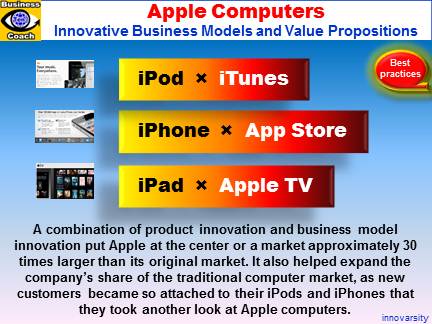
For instance, the iPod and iPhone would not have had
nearly as much impact if they hadn't been matched with iTunes and the App Store
respectively.
Systemic innovation
integration is at the heart of Apple’s success.
Apple works across traditional industry boundaries
to create a successful innovation-friendly ecosystem. The company is in
hardware, in software, in entertainment, and in logistics, and have mastered
parts of all those industries.
The App Store, for instance, the world’s largest
collection of mobile applications, offers hundreds of thousands ways to make iPhone even better. iTunes, innovative software with a powerful
business model, shows that people would pay
for music if the price is right and the interface is simple enough.
Apple’s innovative
value proposition “The product as
an experience” stimulated great ideas when company leaders were contemplating a
new business model. For instance, Apple pioneered into a new business space and
defined a workable business model for downloading music.
Another key driver of Apple’s financial success is
growing adoption of Apple products for business use. Saving time and minimizing
frustration are the essence of Apple’s
brand promise. This
value proposition converts PC and Blackberry users to the Apple brand.
Apple's
innovation strategy also involves great in-store service.
According to the Boston Consulting Group, a
“combination of product innovation and business model innovation (BMI) put Apple
at the center or a market approximately 30 times larger than its original
market. It also helped expand the company’s share of the traditional computer
market, as new customers became so attached to their iPods that they took
another look at Apple computers.”
|