Ten3 Business e-Coach – Your 360 Achievement Catalyst!

Unique source of unlimited inspiration, innovation and growth!

We invented inspirational Business e-Coaching in 2001

Today, we have customers in 100+ countries!

Our selected customers: 

3M, ABB, Adidas, Alcatel, American Express, Bayer, Boeing, British American Tobacco, BP, Canon, Cisco, Citigroup, Colgate, Corning, Deloitte, Ernst & Young, Fujitsu-Siemens, GE, Goldman Sachs, HP, Hitachi, Huyndai, IBM, Intel, Johnson & Johnson, JP Morgan Chase, KPMG, Lufthansa, Microsoft, Motorola, Nokia, Oracle, Samsung, Shell, Sony, United Bank of Switzerland


Revolutionary Ten3 Smart Courselearning without forgetting!


       SMART Innovation


Discover Modern Holistic Approach to Corporate Innovation Success

125 PowerPoint slides + 125 Executive Summaries + User/Teacher License

Learn – fast! – and make powerful presentations!

 Ây: Vadim Kotelnikov

Author and Founder

Ten3 BUSINESS e-COACH

The World's #1

in Business e-Coaching –

Your unique source of inspiration, innovation and unlimited growth!

Innovation as a Key to Success Innovation Strategies Innovative Organization Innovation Processes Innovative People Clickable picture

 Yes!  You are in the right place!

This site is Ranked Top 5 by Google for

"Smart Innovation"

out of about 30-million-wide (!!!) competition!


Selected buyers of this Ten3 Mini-course:

Chase, CIT, Intel, Johnson & Johnson, Cargill


 "I got the material, superior! Helps a lot my thinking. I will be your most happy client going for future.

Really good material, helps me to analyse my company and what we should focus on. Thank you!"

– Pia Vuohelainen, Idean, Finland


Ten3 SMART Course

Synergistic, Motivational, Achievement-oriented, Rapid, Technology-powered


 Contents  


1. Innovation as a Key to Success

The Tree of Business

New Innovation-driven Economy

Revolution in Innovation: 3 Stages

Balanced Business System

Sustainable Innovation – the Key to Survival and Success

Lessons from Jack Welch: Constantly Focus of Innovation

Radical vs. Incremental Innovation

Innovation: The Key Players

Business Model: 6 Components

Top 10 Forces Behind New Business Models

Business Case: Innovative Business Model of Amazon.com

Competitive Strategies

Sustainable Competitive Advantage

2. Innovation Strategies

Creating Sustainable Profit Growth: 9 Questions to Answer

Business BLISS

Strategic Intent

Lessons from Jack Welch: Stretch!

Shift from Linear to Systemic Innovation

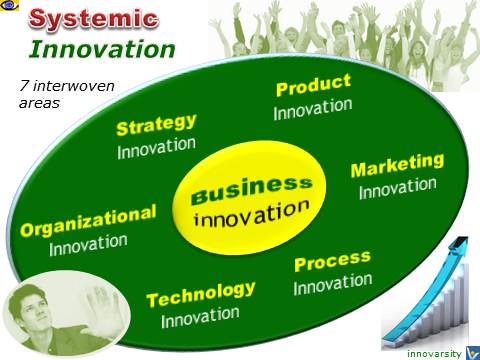
Systemic Approach to Innovation: 7 Interwoven Areas

The Scientific Method as a Model for Discovery

Strategy Innovation: 4 Steps

Strategy Programming vs. Strategy Innovation

Business Innovation and Growth Strategies

Lessons from Jack Welch: See Change as an Opportunity

Organizing Rapid Opportunity Search

Best Practices: Characteristics of the Most Successful Companies

Technology Innovation: 4 Types

Product Innovation: New Product Types

Innovation Strategy: Road-mapping

Venture Strategies: Internal and External Ventures

Venture Management vs. Corporate Management

Success Story: Spinouts of Thermo Electron Corporation

5 Critical Success Factors for New Ventures

Success Story: In-company Ventures by Corning

Specific Skills of Radical Project Managers

Success Story: Corporate Venture Investing by GE Equity

Best Practices: GE Equity – Critical Success Factors

Process Innovation: Shift to Cross-functional Paradigm

The Tao of Business Process Innovation

Synergistic Marketing and Selling

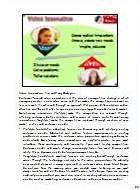
The Tao of Value Innovation

Customer Partnership: Involving Customers as Co-innovators

3. Innovative Organization

Corporate Innovation System: 5+1 Components

Innovation-friendly Organization: 6 Components

Creating a Culture for Innovation

Strategies for Building a Growth Culture

Inspiring People

Creating a Culture of Questioning: 5 Strategies

Creative Chaos Environment

Freedom To Fail

Best Practices: Building a Growth Culture as Dell Computers

The Fun Factor

Lesson from Jack Welch: Make Business Fun

Lessons from Jack Welch: Get Good Ideas from Anywhere

Harnessing the Power of Diversity

The Tao of Leveraging Diversity

Creating Cross-functional Teams

The Tao of Intellectual Cross-pollination

Facilitating Cross-pollination of Ideas

Fast Company

Success Story: Charles Schwab

Best Practices: Charles Schwab's Corporate Guiding Principles

Launching a Crusade

Lessons from Jack Welch: Get Rid of Bureaucracy

Building a Coaching Culture

Owning Your Competitive Advantage

Lessons from Jack Welch: Create a Learning Culture

The Wheel of Knowledge Management

Best Practices: 4 Strategies for Raising Corporate IQ at Microsoft

Engaging Cross-functional Innovation Teams

Best Practices: Cross-functional Innovation Teams at Quantum

Managing Knowledge Workers

Best Practices: Google's 10 Golden Rules

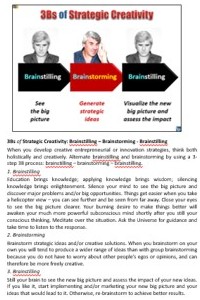
The Tao of Effective Brainstorming

Managing the Flow of Ideas

Perfect Brainstorming: 10 Rules

Best Practices: Utilizing Intellectual Property by Technology Businesses

Intellectual Property Management

4. Innovation Processes

Managing Innovation vs. Managing Operations

Best Practices: Attributes of Effective Innovation in Silicon Valley

Innovation Process: Traditional Phase-Gate Model

Innovation Process: Flexible Model

Business Synergies Approach to Innovation Project Management

The Jazz of Innovation

The Tao of the Jazz of Innovation

The Jazz of Innovation: 11 Practice Tips

The Jazz of Innovation: Key Components

Radical Innovation: Key Uncertainties

Market Development Trend

Fuzzy Front End

Specific Skills of Radical Project Managers

Keys to Successful Market Learning

Radical Innovation: A Different Role of Prototyping

Turning Failures Into Opportunities

New Product Development by Cross-functional Teams

Leading Systemic Innovation

Loose-Tight Leadership

Lessons from IDEO: New Product Design

Experimentation – The Key To Discovery

Lessons from Silicon Valley Companies: Measuring Innovation

Measuring Innovation: New Product Metrics

5. Innovative People

Innovation Drivers in Industrial and Knowledge Enterprises

Innovation Leader: Cross-functional Excellence

Creating a Relentless Growth Attitude

Entrepreneurial Leader: 10 Key Action Roles

Entrepreneurial Leaders: Specific Attributes

Building a Team Culture

The Single Key To a Team Success Is...

A Dream Team: 7 Characteristics

Creative Leadership

How To Lead Creative People

Entrepreneurial Creativity: Action Areas

Developing Entrepreneurial Creativity

Be Different and Make a Difference!

Creativity: 3 Intertwined Pillars

Accidental Discoveries

Turning Accidental Discoveries Into a Habit

Inventing New Products: 6 Thinking Tools

Do's and Don'ts of a Successful Innovator

Entrepreneurial Creativity: 4 Intertwined Pillars

The Tao of Entrepreneurial Creativity

Entrepreneurial Creativity: 5 Steps

Failure as a Stepping Stone to Success

Creative Problem Solving (CPS): Reframing

Creative Problem Solving (CPS): 6-phase Process

Tips for Making the Vision a Reality

 Sample Ten3 SMART Lessons (Slide + Executive Summary)


Two Components of Sustainable Growth Strategy

Sustainable business growth strategy is a practical approach to achieving top-line growth and bottom-line results. The two main sources of sustainable competitive advantage are:

  • Continuous Improvement Culture: continuous effort to improve organizational climate and productivity of the core business in response to continuous changes in the marketplace.

  • Durable Corporate Venture Strategy: internal investment in innovation and new product/service development, new business creation, and external venture investing in new technologies and emerging markets.

Improvement Strategies versus Venture Strategies

  • Improving Processes: Addressing the ever-changing needs of current customers and keeping cash flow healthy. Cost-cutting efforts can build your bottom line.

  • Radical Innovation: It is radical innovation and new game changing breakthroughs that will launch your company into new markets, make you a market leader, enable rapid growth, and create high return on investment.

Continuous Change as a Norm

Companies, like any living organism, must become learning organizations that change and adapt to suit their changing environment. “If you don't practice the change management that looks after the future, the future will not look after you,” says Bill Gates. "The tendency for successful companies to fail to innovate is just that: a tendency. If you're too focused on your current business, it's hard to look ahead.“

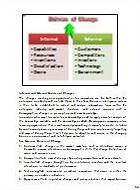
Two Types of Change in the Marketplace

1. Organic, or continuous, change
2. Radical, or discontinuous, change driven by radical innovation


New Systemic Approach to Innovation

Until recently innovation has been seen principally as the means to turn research results into commercially successful products, but not all research leads to innovation and not all innovation is research-based. Certainly research is a major contributor to innovation, generating a flow of technical ideas and continually renewing the pool of technical skills.  It should be a vital ingredient in your enterprise strategy, particularly over long term, if you are to maintain a stream of competitive products on the market.

Important though research is as the source of invention, innovation encompasses more than the successful application of research results. Innovation can also stem from adopting new technologies or processes from other fields, or from new ways of doing business, or from new ways of marketing products and services. The evolution of the innovation concept – from the linear model having R&D as the starting point to the systemic model in which innovation arises from complex interactions between individuals, organizations and their operating environments – demonstrates that your innovation policies and practices must extend their focus beyond the link with research.

Hard vs. Soft Innovation

  • Hard Innovation is organized R&D characterized by strategic investment in innovation, be it high-risk-high-return radical innovation or low-risk-low-return incremental innovation.

  • Soft Innovation is the clever, insightful, useful ideas that just anyone in the organization can think up.

Case in Point: Lessons from Jack Welch

At General Electric (GE), the sum is greater than its parts as both business and people diversity is utilized synergistically in a most effective way. "Practice systems thinking and holistic approaches," advised Jack Welch. Seek to improve and optimize the totality of your business rather than the profits of its components. "Everything about this enterprise is doing more with less. It needs rejuvenation all the time. Quality is the next in the learning process. Getting rid of layer. Getting rid of fat. Involving everyone. All that was to get more ideas. The whole thing here is to create a learning organization."


Two Different Patterns

Because much of the innovation taking place today is incremental, so is its impact on growth. Little ventured, little gained. Other firms, after years of incremental innovation, suddenly throw millions or even billions of dollars at ideas that are poorly conceived, poorly timed, and poorly executed, only to have near-catastrophic consequences.

There is practical value in understanding the patterns in and the differences between evolutionary incremental innovation projects and revolutionary radical innovation projects. This understanding can help you apply right management practices to different types of innovation projects and make the course of radical innovation shorter, less sporadic, less expensive, and less uncertain.

High level of uncertainty is a hallmark a radical innovation projects, especially at early stages. The criteria used to evaluate a radical idea and concept should differ from those applied to evaluating incremental innovations. Viewing radical ideas – associated with high uncertainties – from the perspective of the mainstream business and applying traditional evaluation methods and criteria to them is inappropriate and counterproductive. Either these methods give a false sense of security, or they lead to premature rejection of good ideas...

... and much, much more!


    Ten3 Business e-Coach and Ten3 Mini-Courses with Consultant License Ten3 Training


View demo

125 PowerPoint Slides + 125 Executive Summaries Learn & Teach – fast!  Instant download!

SMART Innovation

US$ 49

Buy now and get Ten3 "Smart Innovation" e-coaching screensaver – 50 slides! – FREE! ► 

Save US$ 19  and enjoy revolutionary Ten3 learning without forgetting!

Do you need to make presentations?  This presentation can be used on a single computer as often as you wish with any individual or group.

Payment options: Secure Online Credit Card; Wire Transfer; Phone; Fax; Mail/Check/Money Order; PayPal


Cannot afford this mini-course? Don't feel upset!

Download and enjoy this smaller (25 slides) Ten3 e-coaching screensaver. It's free!


SMART Learning

Synergistic, Motivational, Achievement-oriented, Rapid, Technology-powered

Source: JCU Study Skills Online

The problem with conventional education and training. Research shows:

  • By Day 2, we forget 50% of what we've learned

  • By Day 30, we retain 2%-3% of the original knowledge and need to be re-trained.

Ten3 Smart Learning: Fast inspirational learning – without forgetting!

  • Smart Course Materials give you the most knowledge and take from you the least time.

  • Key slides of the Ten3 SMART Course are hyperlinked to relevant pages of Ten3 Business e-Coach at 1000ventures.com so you can access additional information conveniently and just-in-time

  • Smart Screen Savers help you reactivate your knowledge and apply it – continually and effortlessly!

  • License to use the PowerPoint slides for teaching purposes – Learn & Teach!


Map

Ranked #1

Search

Testimonials

Free Downloads

  Products

SMART Learning

Training

 Contact

We invented Business e-Coaching in 2001

Today, we have customers in 100+ countries!

Our customers:

3M, ABB, Adidas, Alcatel, American Express, Bayer, Boeing, British American Tobacco, BP, Canon, Cisco, Citigroup, Colgate, Corning, Deloitte, Ernst & Young, Fujitsu-Siemens, GE, Goldman Sachs, HP, Hitachi, Huyndai, IBM, Intel, Johnson & Johnson, JP Morgan Chase, KPMG, Lufthansa, Microsoft, Motorola, Nokia, Oracle, Samsung, Shell, Siemens, Sony, United Bank of Switzerland

Ten3 Mini-courses: SMART & FAST sets Full version of Ten3 Business e-Coach Ten3 Business e-Coach (home page)

Ten3 Business e-Coach, version 2008

Inventor, Author & Founder – Vadim Kotelnikov

© Vadim Kotelnikov, GIVIS