③
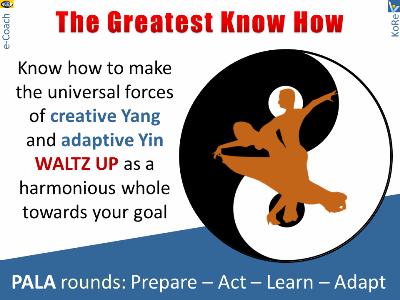
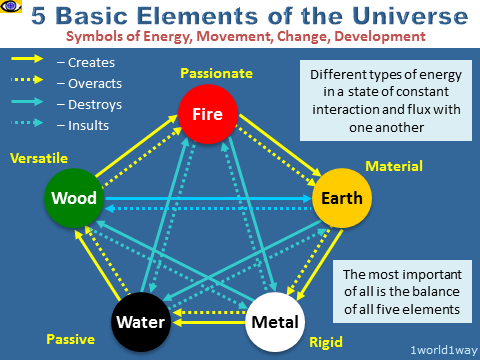
Wise Widespread Use of the Universal
Forces of Yin-Yang and the 5
Basic Elements
④
Deeper Understanding of the Art
of War
⑤
Committed Children
Each of these 5 competitive
advantages is powerful in its
own right, but its their
harmonious and
synergistic combination that
creates China's sustainable
competitive advantage.
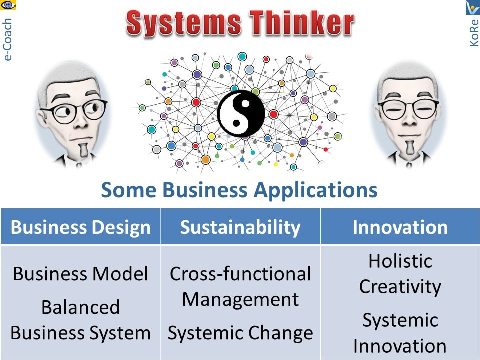
The complexity of systems grows with
rapid development of IT. Mastering systems thinking means overcoming
the major obstacles to inventing, designing and managing complex
social, business, and economic systems.
The most impactful deep
subconscious
barrier to systems thinking is
thinking in a linear language
(for instance,
English language)
characterized by a strict order
of parts of speech in a
sentence: the subject of the
sentence comes first, the verb
comes second, and the object
comes third. This subconscious
strict-order thinking habit
makes it difficult for a linear
thinker to understand chaotic
complex systems.
Chinese language is based
meaningful holistic characters
and thus makes it easier for its
natural users to
think holistically and
master systems thinking.
Just compare these two synonyms:
Chinese companies integrate
their entire value chain into a
seamless workflow, leveraging
centralized platforms that
enable real-time collaboration,
faster iterations, and better
decision-making.
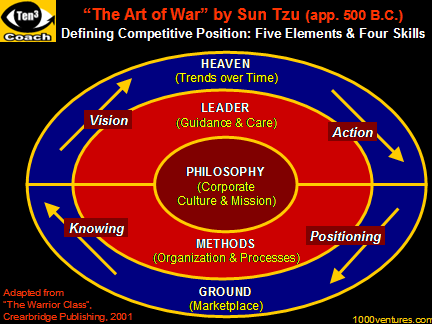
The Art of War is one of the world's best books on strategy
and competition. It was written in app. 500 B.C. and established
itself as the leading treatise on confronting and defeating
opponents through superior strategy. For over twenty-five hundred
years, it helped its readers find competitive advantage.
Yes,
children are the flowers of
life in each and every country,
but in China – where strategists
think three or more generations
ahead – children are also
treated as a source of strategic
competitive advantage for the
country.
Look at the
can-do attitude and skills
of these kids and decide for
yourself if they add to the
strategic competitive advantage
of China.