| |
|
What
Is Hinduism
Hinduism is one of the oldest religions in the
World. Hindu believe that their religion is without beginning or end and is
a continuous process even preceding the existence of the Earth and the many
other worlds beyond. The greatness of Hinduism is at once its complexity and
its
simplicity.
Many ancient cultures in Asia have been greatly influenced by the Hindu
cultural ethos.
|
|
|
 |
Everybody has challenges in life to
face. Life's unfairness does not give you license to walk the wrong
path. No matter how much unfairness we got, what is important is how
you reacted at that time. |
Bhagavad
Gitta |
|
|
The word Hindu is of geographic origin and was
derived from the name originally settled on the River Sindhu. It was
corrupted by foreign visitors to the word 'Hindu', and the faith of the
Hindus was given the name ' Hinduism'. Scholars however call this the
Brahmanical faith, for to attain the Brahman or the Universe Soul is the
ultimate aim of all Hindu thought.
|
| |
Hinduism is also
called Sanatana Dharma or the Eternal Religion
as it possesses great qualities of catholicity
of outlook and free thinking.
Even an atheist is
not precluded from being a Hindu and neither
hell nor doomsday is envisioned for the
agnostic. |
|
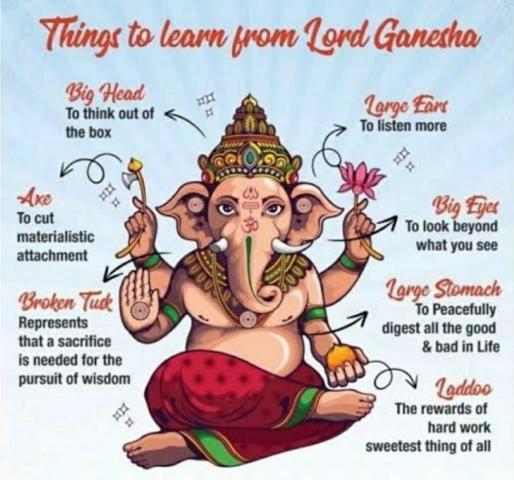 |
|
|
Introduction to Hinduism by Shakunthala Jagannathan
"Hinduism is a rare faith with few "do's" and
"don'ts" postulated, but one which has many signposts showing the different
spiritual paths available to different types of people," says Shakunthala
Jagannathan. "It accepts the reality that there are varying
intellectual and spiritual levels in each one of us and all cannot therefore
take the same path, although the goal may be the same. Hinduism therefore
offers different approaches to persons of different aptitudes, depending on
whether he be a philosopher or a poet, a mystic or a man of
action, an
intellectual or a simple man of faith."
This is a unique feature of the religion as it permits the greatest of
freedom of worship and insists that each person must be guided by his or her
own individual spiritual experience. It does not accept dictatorship in
religious guidance."
|
|
|
Man is God-potential
Indian philosophy has viewed each individual as
trying to realize his identity.
Rama,
a combination of the Divine in the human and the human in the Divine, is the
supreme example of how people should conduct themselves in the world, how a
country should be governed, how the integrity and morality of human beings
should be protected. High-minded actions, ideal qualities, and sacred
thoughts are basic foundations of his character. "Rama is immanent in the
entire cosmos. Rama is present everywhere. Hence you have to love all, serve
all.," said
Shri Sathya Sai Baba.
Indian philosophy has always encouraged people
to raise themselves above day-to-day episodes of life, seek higher meaning
in usual happenings, and connect purpose of life with a
super-ordinate meaning.
"India
preserves the
knowledge that preserves
the World."
~
Sri Aurobindo
|
|
|
The 4 Stages
of Life in Hinduism
In Hinduism, human life is believed to comprise
four stages. These are called "ashramas". Ashram means "a place of spiritual
shelter." Every man should ideally go through each of these stages:
1.
Student
(The First Ashrama – "Brahmacharya")
2.
Householder
(The Second Ashrama – "Grihastha")
3.
Hermit
(The Third Ashrama – "Vanaprastha")
4.
Wandering Ascetic
(The Fourth Ashrama – "Sannyasa")
|
|
|
Bhagavad Gita
The Bhagavad Gītā (Song of God), also more simply known as
the Gita, is a Sanatana Dharma or Hindu scripture produced from the colloquy
given by Sri Krishna to Arjuna during the Kurukshetra War. Its philosophies
and insights are intended to reach beyond the scope of religion and to
humanity as a whole...
More
|
|
|
If you want to see the
brave, look to those who can return
love for hatred.
If you wan to see heroic, look to those who can
forgive. |
Bhagavad
Gitta |
|
|
Bhagavad Gita
Quotes
Action
Action
is greater than inaction. Perform therefore thy task in life.
Even the life of the body could not be if there were no action.
Failure
On this path effort never goes to waste, and
there is no failure.
Even a little effort toward spiritual awareness will protect you
from the greatest fear.
Love
Still your
mind in me, still
yourself in me, and without a doubt you shall be united with me,
Lord of
Love, dwelling in your heart.
More
Bhagavad GIta quotes
|
 |
Yoga means a change
of consciousness; a mere mental activity will not bring a change of
consciousness, it can only bring a change of mind |
Sri
Aurobindo |
 |
If I can't make it through one
door, I'll go through another door ‒ or I'll make a door. Something terrific
will come. |
Rabindranath Tagore |
 |
Become less
knowledgeable and more childlike.
Take
life as
fun – because
that's precisely what it is! |
Osho |
|
|
