| |
|
East* vs.
West
Beliefs,
Life Philosophies,
Cultural Values, Attitudes
|
|
 |
 |
"The most important is to see
the Earth
not as a big planet to
survive on but
a small planet
to take care of."
~
Vadim
Kotelnikov |
|
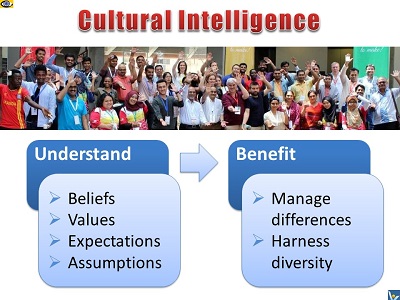
We need to understand
cultural differences not just to reduce conflicts, but also to
leverage diversity and achieve
cross-cultural unity. That's what we do.
|
|
|
|
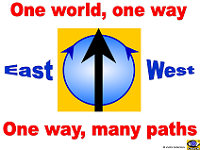
Broadly, speaking, Western society strives to
find and prove "the truth", while Eastern society accepts the
truth as given and
is more interested in finding
the balance.
Westerners put more stock in
individual rights; Easterners in social
responsibly.
|
|
 |
|
East |
Main Principles |
West |
|
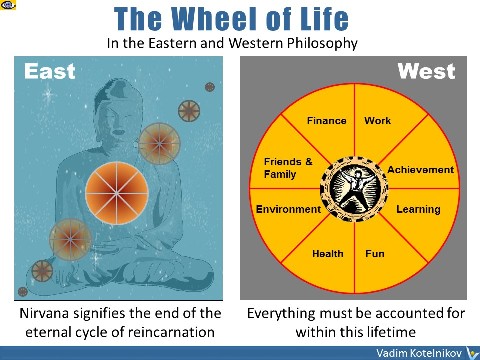
▪ Cosmological unity
▪
Life is a journey towards eternal
realities that are beyond the realities that surround us
▪ Circular
view of the universe, based on the perception of eternal recurrence
▪ Inner-world dependent
▪ Self-liberation from the false "Me" and
finding the true "Me". The highest state is believed to be a state
of 'no-self', where neither self-worth nor self-importance have any real
meaning.
▪
Behavioral ethics |
▪ Feeling oneself as an element of the Divine
▪
Life is a service (to the
God,
money,
business, etc.)
▪
Linear view of the universe and life, based on the
Christian philosophy where everything has its beginning and the end.
▪
Outer-world dependent
▪
Self-dedication to the
goal
(big dream,
life
vision,
happiness,
personal success,
etc.) |
|
Virtue |
Ethic |
|
"To be able under all circumstances to
practice five things constitutes perfect
virtue; these five things are
gravity, generosity of soul, sincerity, earnestness and
kindness. "
~
Confucius
"Be satisfied with
whatever you have, and enjoy the same. When you come to know that you have
everything, and you are not short of anything, then the whole world will be
yours."
~
Lao Tzu
"The thought manifests as the word; The word manifests as
the deed; The deed develops into
habit; And habit hardens into
character. So watch the thought and its ways with care, And let it
spring from love born out of concern for all beings."
~
Buddha |
"Refrain from doing ill; for one all powerful reason, lest
our children should copy our misdeeds; we are all to prone to imitate
whatever is base and depraved."
~ Juvenal
"Regard your good name as the richest jewel you can possibly be possessed of
– for credit is like fire; when once you have kindled it you may easily
preserve it, but if you once extinguish it, you will find it an arduous task
to rekindle it again. The way to gain a good reputation is to endeavor to be
what you desire to appear."
~
Socrates
"There is no real excellence in all this
world which can be separated from right living."
~
David Starr Jordan |
| |
|
The Bridge
"One can live magnificently in this world if one knows how to
work and how to love."
~
Leo Tolstoy
"Imagine
all the people livin' life in
peace.. I hope someday you'll
join us and the world will live
as one."
~
John Lennon
|
|
|
 |
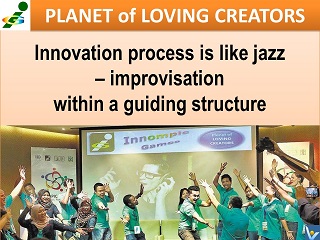
Innompic Games
All-win World
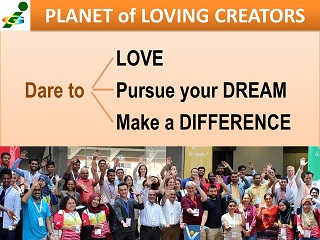
Innompic Games turn the Earth to a
peaceful
Planet of Loving
Creators and nourish
cross-cultural unity. Both Easterners
and Westerners love to contribute to this
noble mission, yet Easterners do so more
enthusiastically and
joyfully. |
|
|
East |
The "Me" concept |
West |
|
Eternal reality of the
universal truth: self-liberation through getting rid of the false "Me" and
discovering
the true "Me" |
"Me" is here and now. The true
“Me” in every human being is a part of the Divine that need to become
apparent. True “Me” is given and
doesn’t have
to be cognizable. |
|
East |
Relationship with
Religion |
West |
|
Deep integration |
Pretended integration |
|
East |
Search for
Truth & Fundamental Research |
West |
|
The truth is
given
is does not to have be proved.
The philosophic base for and culture of fundamental research is
weaker. |
The truth
needs
to be proved.
The philosophic base for and culture of fundamental research is
stronger. |
|
East |
Search for
Absolute
Truth |
West |
|
▪
Holistic approach – all
events in the universe are interconnected
▪
Searching
inside oneself – by becoming a part of the universe through
meditation and right living |
▪ More focused on
individual
events and the role of
the person
▪
Searching
outside oneself
−
through research and
analysis |
|
"Though he should live a hundred years, not
seeing the
Truth Sublime; yet better, indeed, is the single
day's life of one who sees the Truth Sublime." ~
Buddha |
"The truth that survives is simply the lie
that is pleasantest to believe."
~ H.L.Mencken |
|
East |
Beliefs and
Values |
West |
|
The true key is
inside.
The inner world of a human
being and his or her ability to control and develop it is of the highest
value. The way to the top is inside yourself, through
self-development. |
The main values are
success and
achievement. These that can be achieved in many ways, but rarely through
developing inner strength. The majority of
success and
achievement criteria have an external nature (money, faith, popularity,
etc.). The way to the top is through active
outside
intervention.
|
|
"Man is made by his belief. As he believes, so he is."
~
Bhagavad Gita
"The superior man understands what is right; the inferior man understands
what will sell."
~
Confucius
"By chasing desires you will meet only the outer
surface."
~
Lao Tzu |
"Happiness lies in virtuous
activity,
and perfect
happiness lies in the best activity, which is
contemplative."
~ Aristotle |
|
Your future is
determined by
the past and your deeds today. |
Your
future is unknown, it was
predetermined
by God and is not much
influenced by your deeds.
|
|
"Study the past if
you would like to divine the future." ~
Confucius |
"You can never plan the
future by the past."
~ Edmund Burke |
|
Spiritual
practice |
Cerebral
practice
|
|
"There
is a higher court than courts of justice and that is the court of
conscience. It supercedes all other courts."
~
Mahatma Gandhi |
"At his best, man is the noblest of all
animals; separated from law and justice he is the worst."
~
Aristotle |
|
East |
Individualism /
Collectivism |
West |
|
A human being is an integral
part of the universe and the society. People are fundamentally connected.
Duty towards all others is a very important matter.
Collectivism is stronger. |
A human
being has an individualistic nature and is an independent part of the
universe and the society.
Individualism is stronger. |
|
East |
Improvement /
Evolution |
West |
| |
|
Example:
Kaizen (continuous
improvement)
In
Japan,
Kaizen focuses on improving
people. While adopting this
continuous improvement strategy,
the West refocused Kaizen on
improving processes.
|
|
|
|
The fundamentals of the status
quo should not be questioned. The culture of considering and introducing
radical changes is
weaker. |
The fundamentals of the status quo can
–
and often should – be
questioned.
The culture of considering and introducing radical changes
and
innovation is
stronger. |
|
Entrepreneurial creativity
and venturing is
contained
by the habit to control one's passions. |
Entrepreneurial venturing
is
encouraged emotionally. |
|
"Desires are the cause of suffering. If desire,
which lies at the route of all human
passion, can be removed, then passion
will die out and all human suffering will be ended."
~
Buddhism
"Vain indeed is all overweening pride in the
conquest even of the entire universe if one has not conquered one's own
passions."
~
Sri
Aurobindo |
"Nothing is ever achieved by reasonable men."
~
J Fred Bucy of Texas Instruments
"Nothing great was ever
achieved without
enthusiasm... Always do what you are afraid to do... Do not go where the
path may lead,
go
instead where there is no path and leave a trail."
~
Ralph Waldo Emerson
"If you want to succeed, you have to
forge new paths and
avoid borrowed ones." ~ John Rockfeller |
|
East |
Achievement & Winning |
West |
|
Winning is
inside yourself. |
Winning
is
outside
yourself. |
|
"Though he should conquer a thousand
men in the battlefield a thousand times, yet he, indeed, who would
conquer himself is the noblest victor."
~
Buddha
"He who conquers others is strong; he who conquers himself is
mighty."
~
Lao
Tzu
"The
most excellent Jihad is that for the conquest of self."
~
Mohammad |
"You're not a star until they can spell your
name in Karachi."
~
Roger Moore
"Life
affords no higher pleasure than that of surmounting difficulties,
passing from one stop of success to another, forming new wishes and seeing
them gratified."
~ Samuel Johnson |
|
Spiritual and
missionary approach. |
Pragmatic and
emotional
approach. |
|
"To create and develop
without any feelings of ownership, to work and guide without any expectation
and control, is the best quality"
~
Lao Tzu
To achieve self-liberation and
nirvana you need to perform your duties without expecting any reward for it.
~ Vedanta,
Hinduism
"Action can be achieved by inaction,
where the result is achieved by "Not-Me"
~
Zen |
"The supreme accomplishment is to blur the
line between work and play."
~ Arnold Toynbee
"Since most of us spend our lives doing
ordinary tasks, the most important thing is to carry them out extraordinary
well."
~ Henry David Thoreau
"Every minute you spend in
planning
saves 10 minutes in execution."
~
Brian Tracy |
|
East |
Goals & Key to
Success |
West |
|
Spiritual |
Materialistic |
|
"Live a virtuous life and
adhere to
performing your duties."
~
Confucianism
"The Three Armies can be deprived of their commanding
officer, but even a common man cannot be deprived of his purpose."
~
Confucius
"If you really want
everything, then give up everything."
~
Lao Tzu
"He is able who thinks he is able."
~
Buddha |
"The secret of
success in life, and
subsequently of
making money, is to
enjoy your work. If you do, nothing is
hard work – no matter how many hours you put in."
~
Sir Billy Butlin
"Success is that old ABC –
ability,
breaks and
courage."
~ Charles Luckman
"Flaming enthusiasm, backed by horse sense and persistence,
is the quality that most frequently makes for
success."
~
Dale Carnegie |
|
East |
Establishing Control
Over Your Emotions |
West |
|
Through
meditation |
Through
analysis
|
|
A man can
separate his/her mind from his/her emotions and control them.
~
Taoism |
"I can control my
passions and emotions if I
can understand their nature."
~ Spinosa |
|
Spiritual
Walking behind people;
silence is golden |
Hands-on
Walking ahead of people;
speech is golden |
|
"In order to
guide people, the
leader must put himself behind them. Thus when he is ahead
they feel no hurt."
~
Lao Tzu |
"Leadership is
done from in front. Never ask others to do what you, if challenged, would
not be willing to do yourself."
~
Xenophon |
 |
Eastern-Western Leadership
Here is an
illustration of a mixed Eastern-Western
leadership
style: as
the leader, I am
in front (Western style), but I am
not seen (Eastern style). |
|
| |
|
How to use this information
①
"Adapt what is useful, reject
what is useless, and add what is
specifically your own."
~
Bruce Lee
②
Sleep on this information – your
powerful
superconscious mind will
tell you how to use it when you
wake up
|
|
|
|
* Eastern philosophy is a group of philosophies and
religions originating in
Asia
–
China,
India,
Japan, Southeast Asia, and Arabic
countries
** Through
Christianity
originated in Asia
geographically, culturally it's considered to be a Western religion that
originated in the Mediterranean region
|
|
I just wanted to let you know
that I happened to run across your web site by accident − and, I love it!
Our organization was designed to teach
managers
how to manage and
leaders
how to lead. Your web site offers a lot of great ideas. Thank
you for all you do!
|
Peggy Bane |
USA |
|
I am a great fan of
you and am completely amazed to see the
e-Coach and the kind of content it has. All the topics are simply superb
and I feel they are all very well written to help
anyone under the sky . |
Krishna Kumar |
India |
|
I have been
fortunate to discover your informative and highly evolved business site. The
e-Coach itself is clear, inspiring, and well constructed. The
information content is of a high calibre and easily assimilated.
|
Isabel Miller Virga |
UK |
|
Your
teachings, experience and philosophy are my guiding light.
Your e-Coach is
just the best resource for aspiring
change leaders.
|
Anne Wolfaardt |
South Africa |
|
|
|