|
|
Maslow's Hierarchy
of Needs
Maslow's hierarchy of needs is an idea
in psychology proposed by American psychologist Abraham Maslow in
his 1943 paper "A Theory of Human Motivation" in the journal
Psychological Review. |
|
 |
|
KoRe Nugget
Maslow's hierarchy is not merely a
pyramid to climb. It is a mirror that reveals what we need, who we are becoming,
and how we can help others become more than they imagined possible.
|
|
| |
Higher Self and Lower Self
According to Maslow, human needs
were arranged in a hierarchy,
with physiological (survival)
needs at the bottom, and the
more creative and intellectually
oriented ‘self-actualization’
needs at the top.
Maslow subsequently extended the
idea to include his observations
of humans' innate
curiosity.
|
|
Basic physiological needs
▪ warmth
& food
▪ sexual fulfillment
▪ safe, structured environment
Higher needs
▪
love, the need to be desired, accepted unconditionally
▪ esteem, the need to be
valued, appreciated, respected,
recognized, complimented, approved of personal fulfillment |
|
|
 |
| |
|
①
Grow Your Tree of Life from
the Bottom Up
Just as a skyscraper needs a
strong foundation, personal
growth begins by meeting your
most fundamental needs. Before
chasing purpose, innovation, or
mastery, ensure that your
physical health, financial
stability, and personal safety
are adequately addressed.
KoRe Nugget: Dreams grow
fastest when their roots are
healthy.
|
|
|
| |
|
②
Treat Unmet Needs as Signals,
Not Failures
When motivation drops, don't
automatically blame yourself.
Ask which level of need is
currently underserved. Sometimes
a lack of creativity is actually
a lack of rest. Sometimes a lack
of confidence is actually a lack
of belonging.
KoRe Insight:
What appears to be a performance
problem is often a needs
problem.
|
|
|
| |
|
③
Invest in Relationships
Before Achievements
Many people focus relentlessly
on accomplishment while
neglecting connection. Yet
belonging is not a luxury
between survival and success. It
is an essential bridge.
KoRe Proverb: People may
meet in the valley of small
talk, but they discover their
strength while climbing
mountains together.
|
|
|
| |
|
④
Continuously Upgrade Your
Definition of Success
|
|
|
| |
What satisfies you at one stage of life
may no longer satisfy you later.
Financial security may dominate your
twenties, while legacy, purpose, or
contribution may become more important
later.
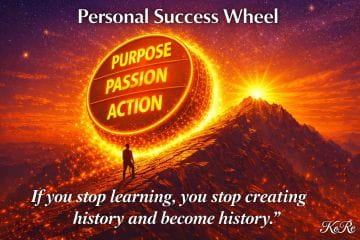
KoRe Proverb: Growth requires periodically
rewriting your personal definition of
achievement.
|
|
 |
| |
|
⑤
View Self-Actualization as a
Journey, Not a Destination
There is no finish line where a
person permanently arrives at
self-actualization. Life
presents new challenges,
opportunities, and lessons that
continually expand who we can
become.
KoRe Insight: Those who chase
goals eventually arrive. Those
who pursue growth discover that
every arrival is the doorway to
a larger horizon.
|
|
|
| |
⑥
Use Higher Needs to Energize Lower
Ones
Sometimes the top of the pyramid helps
support the bottom.
Purpose can help people endure hardship. Meaning can
create resilience during uncertainty. A compelling vision often provides the
energy needed to overcome immediate obstacles.
KoRe Insight: Your
higher purpose is the
powerful 'Why' that keeps your spirit moving forward. As long as the Why
remains alive, you will continue discovering new Hows that transform
possibility into reality. |
|
Knowing People
Social
Intelligence
360-degree
Assessment
MTBI
Empathy
Enneagram
Customer Needs
|
|
| |
⑦
Focus on Contribution, Not Just
Fulfillment
The highest levels of personal
development often involve helping others grow. The most fulfilled people
frequently discover that meaning comes less from what they receive and more
from what they give.
KoRe Insight: The summit of personal
growth is not self-centered achievement but value-centered contribution. |
|
Strengths
10-3-1
Leadership
Effectiveness Survey (LES)
Cultural Differences
10 Main Patterns
|
|
| |
|
KoRe 3 Thought-Provoking
Questions
1. Which level of Maslow's
hierarchy currently receives
most of my attention, and which
level have I been quietly
neglecting?
Many life frustrations arise not
from what we pursue,
but from what we ignore.
2. If all my basic needs
were permanently satisfied
tomorrow, what would I choose to
create, contribute, or become?
Your answer may reveal your
deepest aspirations.
3. Am I climbing Maslow's
pyramid, or am I helping build
ladders for others?
The most enduring legacy often
comes not from reaching the top
alone, but from enabling others
to rise with you.
|
|
|
| |
Understand and Fulfill
Needs of Others
One of the golden rules of the therapy
profession is that everyone needs at least one person with whom they can
openly and unashamedly discuss every little detail
–
happenings, desires, fears
– of
their
life, whether it is from the past, present, or future.
There are other psychological needs
– to be
accepted unconditionally, appreciated, recognized, respected, desired,
valued, approved of, or complimented
– that
affect the way we communicate with each other...
More |
|
8 Needs that Motivate
Top 10 Subconscious Life Values
Pragmatic Motivation
Meritocracy
Needs of Team Members |
|
|
|