|
What is Business Synergies
Approach?
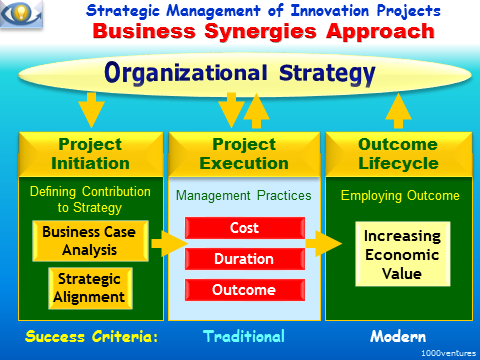
The systemic business
synergies
entrepreneurial
approach is concerned with discovering possibilities for adding value to the
organization, not with finding solutions within given constraints. Though
this approach is built on the old triple constraints of project management –
cost, duration, and outcome, – it goes beyond these constraints to consider
factors for developing business results.
Results-based Leadership
Entrepreneurial Leader: 4 Specific Attributes
Why Business Synergies
Approach?
Change in the marketplace that is accelerating
and occurs at increasingly random patterns today, increases the market risk
and the necessity of having project managers make important decisions at the
project level during its implementation. Constraints imposed earlier may
become obsolete very fast, and there is no time to constantly check in with
upper management before acting to keep up with changing conditions.
Two
Approaches to Project Management
Project
Management: 2 Approaches
-
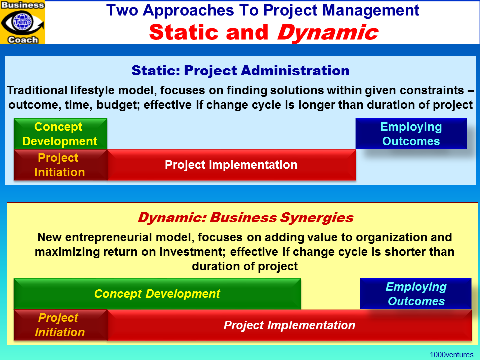
Business
Administration
– focuses on finding solutions within given constraints (output,
time, and budget); characterized by an early design freeze that creates
a stable target for the project; effective when duration of the project
- or the time required to innovate - is shorter than the rate of change
in the business environment.
-
Business Synergies – focuses on adding value to
the organization and maximizing return on investment; does not lock down
design earlier than absolutely necessary not to miss a newly emerging
opportunity; effective for managing innovation projects in the rapidly
changing environment, where change cycle is shorter than or equal to the
duration of the project
Managing Innovation
Projects versus Lifestyle Projects
Managing innovation requires
specific business systems approaches.
Systemic
Innovation: 7 Areas
The Jazz of Innovation
The Jazz of Innovation: 11 Practice Tips
Loose-Tight Leadership
"If you try to manage the
uncertainty inherent in innovation with tools and thinking designed for the
relative certainty of operations, you'll run into trouble... You'll be
continuously surprised as your assumptions prove false."5...
More
New Tasks of the Project
Manager
Entrepreneurial management is
fundamentally different from corporate management that is focused
on delivering the annual operating plan.
You need to consider your project and your project outcome lifecycle in a
wider context of the overall organizational strategy. Unlike traditional
project manager who has to meet static constraints of project deadlines,
budget, and outcome, you should act as an entrepreneur and deal with
a dynamic business system. You should be able to manage for broader
economic and financial gain for the project and project outcome lifecycle,
thereby contributing increased shareholder value to your company.
The
Tree
of Business Success
6Ws of Corporate Growth
To achieve that goal, you would require to have
a
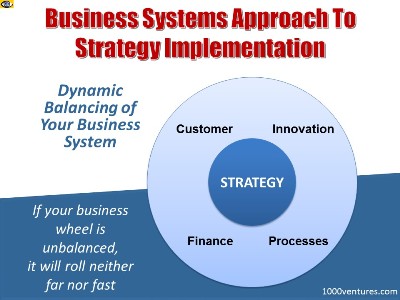
broader understanding of the whole business and the way your project
supports the overall strategy and fits into the dynamics of the business
system. You should also be prepared to fine-tune the project budget and the
project as a whole in response to market changes and competitor actions in
order to react timely to arising problems and
emerging opportunities.
New System of Success
Measurement and Control
Entrepreneurial approach to project management that understands the
dynamics of the marketplace and competition may require radical change in
the project success measurement and control systems of most organizations.
Business-oriented controls should focus on market performance, timing and
investing for higher return rather than on meeting fixed specifications and
constraints. They must resist the temptation to use
operating-plan logic to
manage new ventures.
New Mindset of the Upper
Management
Smart
Executive
Competitive
Strategies: 2 Types
The parent organization should treat the
project as and internal start-up or a
spinout that, in a competitive environment, develops an outcome that
supports the overall
organizational strategy and, in particular, the
corporate venture strategies, and contributes to its competitive
sustainable advantage. Organizations should provide an enabling environment
to empower the project manager to act as a
CEO and thus to contribute his best to the corporate strategy. Apart
from providing the necessary funding, the organization should shield the
project manager from organizational restrictions, reward results, and
exercise minimal control.
Many of these organizations will need to change
their mindset, redefine their concept of organization and loose controls in
order to expand their
capacity for
speed. They should broaden their tolerance to mistakes and encourage
entrepreneurial approaches not only verbally, but by creating conditions by
which you can be an
entrepreneur. |