Involve
Everyone
A Kaizen culture is set by example, is enabled
using a common method and is nurtured by
recognizing achievements, and
building upon the resulting learning. Kaizen is something that everyone in
your organization can and should take part in, from the head of the
organization and the shareholders all the way down to the janitors.
|
Kaizen and
Corporate Culture
"If you're not getting better, you're getting
worse."
~ Pat Riley
>>>
→
Kaizen
is an integral part of a
→
corporate
culture of a Continuous
Improvement Firm (CIF).
→
5 Principles
of Kaizen
→
Kaizen Culture:
8 Key Elements
Nurturing and
effectively integrating Kaizen into corporate culture is not easy.
→
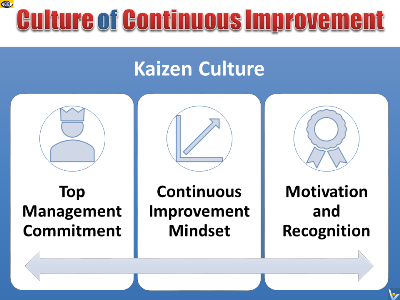
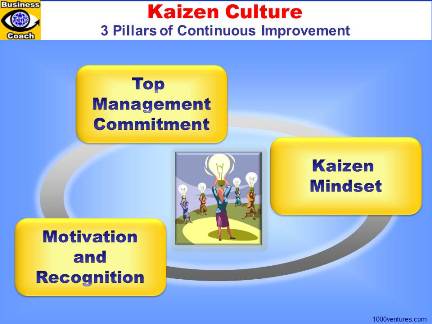
Top management commitment and
leadership by example is absolutely necessary. If
managers don’t have time for Kaizen then neither will their employees.
Building a
Kaizen culture has to be central to the way your
→
organization
works, not something to do if or when you have the time. It requires a
sustained effort.
But, as
→
Toyota has demonstrated, Kaizen offers a more
→
sustained competitive advantage. It also fosters a
culture of learning and
→
experimentation
without blame, with all workers understanding
that their opinions are important and useful to the overall system.
→
Toyota Production System
→
Areas Targeted by
TQM in Japan
 Unipart Unipart
The Unipart Group of companies in the UK makes
and distributes automotive components. Unipart created and
branded their Kaizen program, which encourages and facilitates
continuous
improvement across the group, using a common reporting methodology. They
also found and developed
lean experts from within the group who could teach
and support all aspects of continuous improvement.
→
Lean Enterprise:
Kore 10 Tips
 Example of a Lean Value Chain
The initiative aimed at
establishing a Kaizen culture in the group has been led
by the Chief Executive from the very beginning. He taught Kaizen in the company university,
reviewed progress on the shop floor and attended all recognition ceremonies.
Every improvement
activity is entered into a group wide easily searchable intranet information
system. Every employee can learn whether someone had already
found a
→
solution to this or a similar problem,
how the problem was solved, who was involved in it, and what tools were used.
|