| |
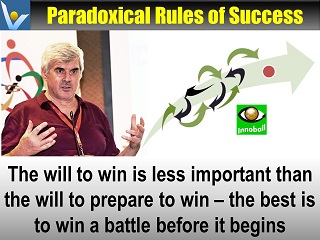
"Victorious warriors
win
first and then go to war, while defeated warriors go to war first and then
seek to win," writes Sun Tzu in
The Art of War.
Prepare to win and plan in
advance
so that you are
thoroughly prepared to bring the
sales conversation to its
natural conclusion in the most appropriate
way.
|
|
 |
| |
|
Your ability
to ① find the reason the prospect will buy
and press this "hot button", and ②
anticipate and answer objections and get the
sale defines how good you really are as a
salesperson.
|
|
|
| |
①
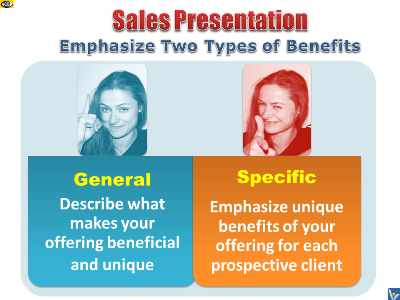
Sell benefits and
solutions, not features.
②
Ask questions that will
uncover or create prospect's
need for your products.
③
Present product-related
solutions that satisfy the
customers needs.
④
Overcome objections they may
raise.
⑤
Close sales.
|
|
 |
 |
|
In
other words, core selling skills
include the ability to make
positive
first impression and be
charismatic, establish
rapport quickly, answer
prospects' questions, and
ultimately overcome their
natural reluctance to make a
commitment that wraps up the
sales process.
|
|
| |
|
Understand Risks Perceived by
Prospects
|
|
|
| |
|
Know the Enemies of Selling
"Every sale has five basic
obstacles: no need, no money, no
hurry, no desire, no trust,"
says Zig Ziglar. Prepare
yourself in advance.
Empathize with your
prospects to anticipate anything
they might offer as a reason for
not buying. Be ready.
|
|
|
 |
|
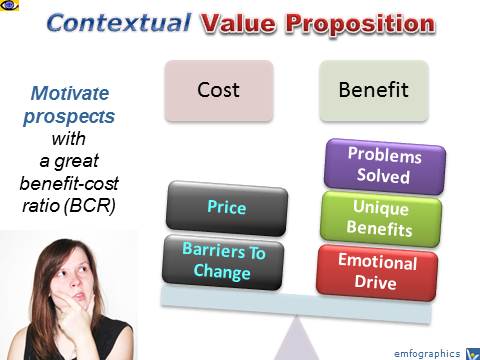
Brainstorm a list of possible
objections based on your product, service or solution. Consumers may
perceive, both consciously and subconsciously, many different
types of risks in buying and consuming a product. |
|
|
 |
| |
|
Sell Benefits, Solutions, and
Achievements
|
|
|
| |
|
Turn Objections into Reasons for
Buying
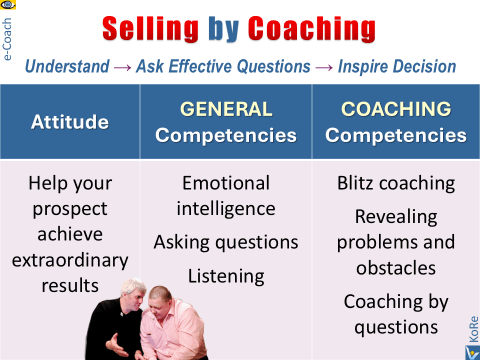
Know
how to turn problems to
opportunities. A typical
prospect usually has both a
reason for buying a product and
an objection that stops s/him
from buying it. You task is to
emphasize the former and remove
the latter to make the sale fall
together naturally.
Use different
closing tactics for smaller
and larger products.
|
|
|
 |
|
In selling smaller products or
services, where you can make a complete presentation in the first
meeting, your approach to closing
will be different from that required if you are selling a complex
product in a multi-call sale that stretches over several meetings.
|
|
|
|