|
Limited Attention Span
The limited attention span means that only part
of your memory surface can be activated at any one time. "This limited
attention span is extremely important for it means that the activated area
will be a single coherent area and that single coherent area will be found
in the most easily activated part of the memory surface. The most easily
activated area or pattern is the most familiar one, the one which has been
encountered most often, the one which has left most trace on the memory
surface. And because a familiar pattern tends to be used it becomes ever
more familiar. In this way the mind builds up that stock of present patterns
which are the basis of code communication."1
Mental Patterns
Mental pattern is a memory trace formed in your
brain tissue to record something that you have experienced. As you see,
hear, feel, smell, sense or taste something over and over, your brain builds
a pattern of it.
When you experience it again, or something like
it, your brain activates the existing memory trace or patterned thinking and
you go on autopilot.8
Your Brain Can Process Only Positive
Information
The language of brain are pictures, sounds,
feelings, tastes and smells, i.e. inputs from your senses. Your brain cannot
work with negative information, i.e. inputs you haven't experienced. It can
work only with positive information, i.e. "information from the experiences
of your five senses, which it then manipulates in the emotional blender we
call the imagination."4
Can You Reflect and Act at the Same Time?
Well... sort of. Reflecting and acting at the
same time is very difficult as
our mind can
only hold one thought at a time. You can be going through periods of
reflection and action at the same time but at any specific moment in time
you are only spending energy in one of these two areas. You need to be
focused on either reflection or action at one point and then be able to
switch quickly and effortlessly to the other polarity when required. This is
an important point to remember when you are considering focus and
balance your life.9
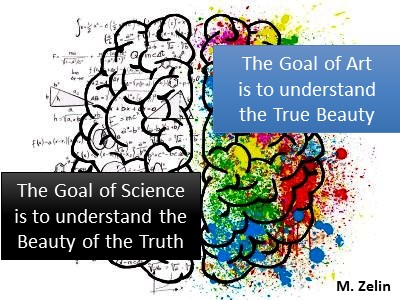
Left Brain / Right Brain
Research on brain theory helps you understand
why some people are excellent inventors but poor producers or good
managers but weak
leaders.
The research indicates that the
brain is divided into two hemispheres, the left and the right, and that each
hemisphere specializes in different functions,
processes different kinds of information, and deals with different kinds of
problems. The left brain works more with logic and analysis, the right works
more with emotions and imagination.
"As we apply brain dominance theory to the
three essential roles of organizations, we see that the manager's role
primarily would be left brain and the leader's role right brain. The
producer's role would depend upon the nature of the work. If it's verbal,
logical, analytical work, that would be essentially left brain; if it's more
intuitive, emotional, or
creative work, it would be right brain. People who are excellent
managers but poor leaders may be extremely well organized and run a tight
ship with superior systems and procedures and detailed job descriptions. But
unless they are internally motivated, little gets done because there is no
feeling, no heart; everything is too mechanical, too formal, too tight, too
protective. A looser organization may work much better even though it may
appear to an outsider observer to be disorganized and confused. Truly
significant accomplishments may result simply because people share a
common vision, purpose, or sense of mission."5
Divide Your Time Between the Left-Brain
and Right-Brain Activity
If you keep bouncing back and forth between
creative and analytical activities,
you'll get a headache and won't produce
your best results. Analysis, evaluation and judgment get in the way of
creativity.
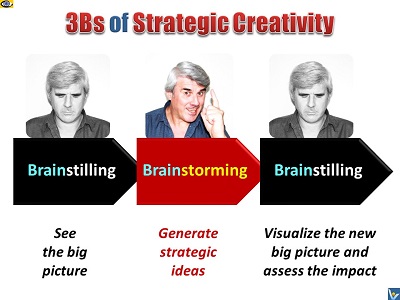
That's why in
brainstorming sessions we suspend judgment while we generate ideas.
Similarly, radical innovation
project managers apply the
loose-tight
leadership technique to divide time between divergent and convergent
thinking by their team members at different project stages.
Your Brain Cannot Think While It Focuses
on Two Sensory Inputs
Research shows that "when a person is thinking
actively (as documented with EEG equipment) and then focuses on one
perceptual happening such as sound, a tactile sensation, or an image, the
brain waves remain basically the same and thoughts continue flow through the
mind.
We can expand our mind's attention to include one perceptual input and
still keep thinking actively without loosing our concentration on our
thoughts. However, when the human mind focuses on two distinct sensory
inputs at the same time (a sound and an image, for instance, or breath and
heartbeat), all thoughts almost immediately stop flowing through the mind."7
The Brain Likes to
Race Ahead
Once your mind gets moving in a direction, be
it a left-brain direction (logical, mathematical, judgmental, analytical
activities) or a a right-brain one (creative, visual, spatial concepts), it
tends to keep going. To illustrate this, try this easy test suggested by
Timothy Foster6:
What do you call a funny story? – joke
What are you when you have no money? – broke
What's another word for Coca Cola? – Coke
What's the white of an egg?
--------------------
It isn't yolk, it's albumen. Were you tricked?
Most people are. The brain likes to race ahead, because it already knows the
answer.
Capacity of Our Working Memory
The maximum amount of items we can store in our
working memory, or conscious mind, is three or four. If
you need to hold more items in your mind at one time. use tricks like
repeating items over and over or grouping items together, like we do with
phone numbers.
Intelligence is related to working memory. The
more information you can hold in your mind at one time. the more information
you can interrelate. If you have a better working memory your
creative problem-solving abilities are better.
Memorization Problems: Solved!
Have you ever had problems in
remembering names, numbers, grocery items needed, and other
little details such as the location where you placed your car
keys this morning? The truth is, we all have our moments of
forgetting little bits of information that matters at the exact
moment we need them.
But did you know that memorization
techniques boil down to two basic things?...
More
Mediation
Meditation is the
most powerful mind tool ever developed. Meditation has been
scientifically proven to improve creativity,
intelligence, memory, alertness, and to integrate left and right brain
functioning. It has been shown to improve physical, mental, and
emotional
health...
More

|