|
Contents
1. New Product Development Strategies
10 Best Practices of the Most
Successful Companies
Best
Practices: Dynamic Strategy Formulation by Silicon
Valley Companies
The Need for Strategy Innovation
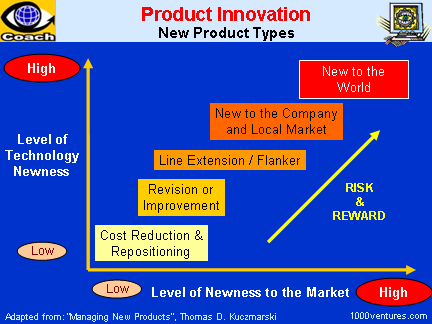
New Product Types
Managing Your Project Portfolio
Radical
vs. Incremental Innovation
Lifestyle vs.
Venture
Management
5 Critical Success Factors for New
Ventures
Venture
Strategies: Internal and External Ventures
Success
Story:
Corning –
In-Company Ventures
Best
Practices:
Venture Acquisitions by Apple
New Product Blueprint
Creating a New Product Blueprint: 6
Components
2. Inventing and Designing a New Product
Five Levels To a Product
Why New
Products Fail?
New Product Development (NPD): 7 Stages
and 4 Sub-Processes
Engaging
Cross-functional Teams
Best Practices:
Cross-functional Innovation Teams at Quantum
New Product Development by
Cross-functional Teams
Lessons
from Dell: Turn Your Customers Into Teachers
Customer-driven Innovation: 7 Practice Tips
Challenging Assumptions
Inventing
New Products: 6 Inventive Thinking Techniques
Inventing
New Products: Selected TRIZ Principles
SCAMPER Idea Generation Technique
Perfect
Brainstorming: 10 Rules
Techniques for Fast Evaluation of Ideas
and Decision Making
Idea Evaluation by Weighted Criteria
Innovation Football Simulation Game:
Evaluating the Idea and the Team
New
Product Design: 5 Stages and Refining Process
7 Reasons
for Shifting to New Approaches
Best
Practices:
New Product Design: 5-Step Methodology by
IDEO
Best
Practices:
Apple's Design Process
Lessons
from IDEO:
Keeping Eyes Open for Inspiration
New
Product Design:
Observing
People
Radical
Innovation: A Different Role of
Prototyping
Alpha-Testing and Beta-Testing of a New
Product
Success
Story:
Procter & Gamble Align Probiotics
Beta-Testing: Market Learning and
Discovering Customer Values
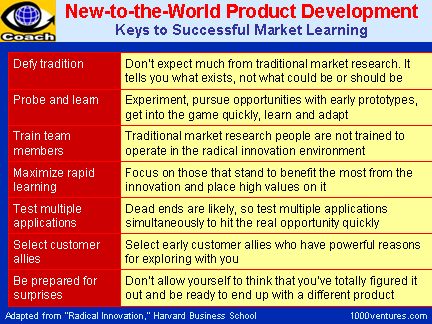
New-To-The-World Product Development: Keys To
Market Learning
DOs and
DON'Ts of a Successful Innovator
3.
Corporate
Innovation System
Corporate
Innovation System: 5+1 Element
Inspiring
Culture
Creating a
Culture for Innovation: 5 Strategies
An Ideal New Product Environment
The Tao of Intellectual
Cross-pollination
Facilitating Cross-pollination of Ideas
Managing
Innovation Projects: Business Synergies Approach
Milestone-based Thinking
Best
Practices:
Indiaco's
Milestone Program
Measuring
Innovation: Benefits, Role, and Practices
New Product Metrics
Best
Practices:
Innovation
Metrics Used by Silicon Valley Firms
4.
Innovation
Process
Best
Practices:
Attributes
of Effective Innovation in Silicon Valley
Managing
Operations vs. Managing Innovation
Radical
Innovation: Key Uncertainties
Radically
New Product Development: Key Uncertainties
Specific Skills of
Radical
Project Managers
Fuzzy
Front End
Loose-Tight Leadership
Innovation Process: The Traditional
Phase-Gate Model
Innovation Process: Traditional vs.
Modern Flexible Model
Project Management: Business
Administrations vs. Business Synergies
The Jazz
of Innovation
The Jazz of Innovation: Key Components
Creative
Chaos Environment
Experimentation – The Key To Discovery
The Jazz
of Innovation: 11 Practice Tips
5.
Entrepreneurial Organization and People
Entrepreneurial Organization: 10 Characteristics
and 5 Benefits
Best Practices:
Organizational Structure of
Silicon Valley Firms
Inspiring People: 4 Key Strategies
Create a
Culture of Questioning
New Product Director
Entrepreneurial Leaders: 4 Specific
Attributes
Creative Leadership DOs and DON'Ts
Motivate Innovators
Best Practices:
Rewarding Innovative
Behavior in Silicon Valley Firms
6.
Business Model and Marketing Strategies
Business
Model: 6+1 Components
Success
Story:
Dell Inc. – New Business Model
Success
Story:
Amazon.com – Creating Competitive Advantage
Strategic Alliances
Mutual Creativity in Business
Partnerships
Customer
Value Proposition
Success
Story:
Xerox – Innovative Revenue Model
Market Development Trend
Lessons from
Steve Jobs:
Sell Dreams and Emotional Benefits
Brand Building and New Product
Marketing
Barriers To Market Entry
Differentiation Strategy: 3 Parts and 4 Steps
Weak and Strong Differentiation
Strategies
Success
Story:
Half.com – Creative Buzz Marketing
Yin-Yang of
Value
Innovation
7.
Fast To Market
First To
Market: Importance and Tactics
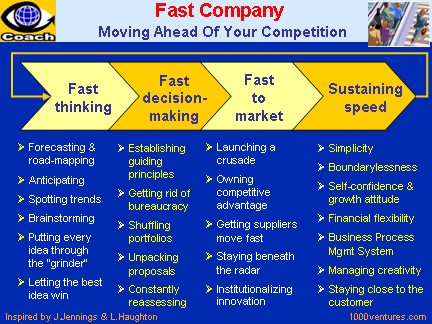
Fast Company: 4 Components
Success
Story: Charles Schwab – Fast Company
Best
Practices: Charles Schwab – Establishing Guiding
Principles
Launching
a Crusade
Owning
Your Competitive Advantage
Lessons
from Jack Welch:
Simplify
Lessons
from Silicon valley Firms:
Creating a Relentless Growth Attitude |