 |
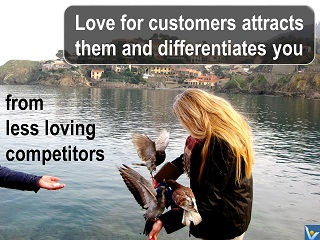
It's not enough to simply be
liked by potential buyers. You
also need to be highly
remarkable and memorable.
~
Vadim
Kotelnikov |
|
Differentiation is about setting
your company, product, or
service apart. It distinguishes
your
brand from all others.
And remember, your
value
proposition is differentiated
not when you understand the
difference, but when your
potential buyers understand it.
|
|
| |
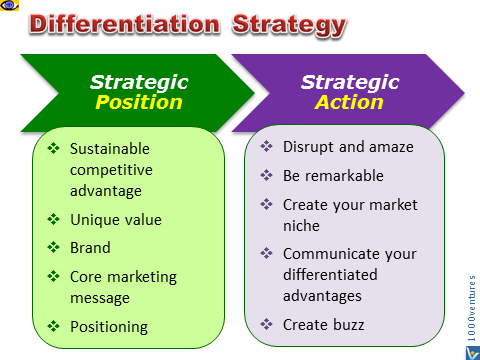
Your differentiation strategy is an integrated set of action
designed to produce or deliver goods or services that customers
perceive as being different in ways that are important to them.
|
|
 |
| |
|
Two Target Audiences of Your
Differentiation Strategy
①
You and Your Team ② Your
Prospects
Both you and your prospects must
be clear about how the
value you create is
remarkably different.
|
|
|
 |
|
"In today's
global, noisy, overcrowded, and
hyper-competitive marketplace, simply being
flawless isn't enough. A seller also needs to be
distinctive, striking, and memorable. I practice
what I preach, and I preach what I practice."
~
Vadim Kotelnikov |
|
| |
The
slogan
'I don't teach, I inspire!'
differentiates my
e-Coach
you are reading now from formal
education |
|
 |
| |
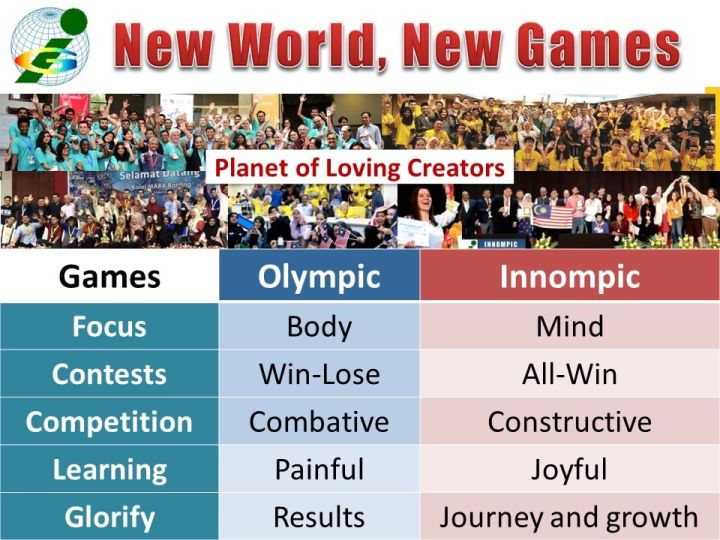
Olympic Games were invented in
Greece 2,800 years ago when the
world was ruled by athletic
warriors.
Something has changed since
then.
Today's world is driven by
creative entrepreneurs.
Innompic Games
are new Games for the new world.
|
|
 |
| |
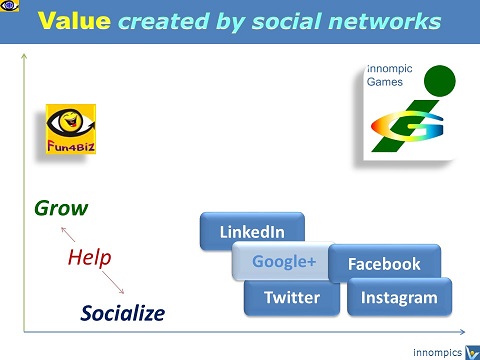
Innompic Games
vs.
traditional social networks
Traditional social
networks are horizontal – they
help people socialize.
Innompics is both vertical and horizontal. It helps
Innompians both
grow and
connect at the deeper level.
|
|
 |
| |
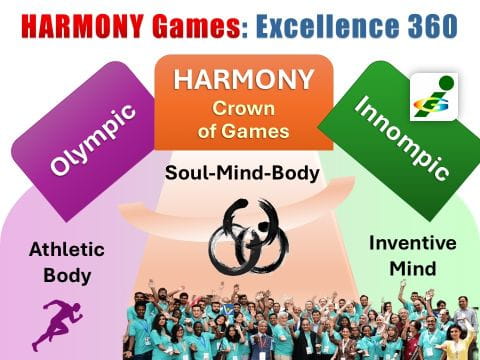
HARMONY Games differentiated and positioned
If man is the
pinnacle of creation,
then the creative
HARMONY Games that celebrate the harmony of
soul, mind, and body are the pinnacle of the
games. |
|
 |
| |
2 Basic Ways
to Compete and Prosper
in Any Market
① To have a strong
and impactful differentiation strategy;
② To be a low-cost
producer.
If you aren't
different,
you must have low
prices.
If you have high
prices,
you must be different and appealing! |
|
 |
 |
|
"If you don't
change the world for the better, why do you even
exist? If you believe in
your abilities, you will see opportunities and
roads to
success. If you don't believe in your
abilities, you will see barriers and roads to
failure. The difference between possible and
impossible is inside you."
~
Vadim Kotelnikov |
|
|
|
Differentiation
Strategy
and a
Coherent Marketing
Direction5 |
|
|
References:
-
Differentiate or Die, Jack Trout with Steve Rivkin
-
Extreme Management, Mark Stevens-
The Power of
Simplicity, Jack Trout with Steve Rivkin
-
The 22
Immutable Laws of Marketing, Al Ries & Jack Trout.
-
Strategic Management: Competitiveness and Globalization, Edition 4
-
Competitive
Strategy, Michael Porter
-
Agenda, Michael Hammer
|
10 Commandments of Innovation
→
Be different.
Differentiate yourself and your product...
More
Creative Marketing
How are you going to stand out from
competitors?
Apart from cutting edge products you need
design and implement cutting edge marketing strategies.
Yes, traditional marketing techniques can
deliver average results, but "out of the box" solutions can make wonders.
Creative
marketing will help you generate the results you’ve been looking for.
Unique original low-cost marketing ideas can help you grow your business
tremendously. Innovative marketing strategies can move your brand quickly
from an intriguing concept to a household name...
More
Harnessing the Power of
Psychology
You don't need a degree in psychology to
→
compete successfully
in the marketplace,
but you do need some way to figure out the
different styles of interaction different people prefer to use.
People tend to lead their decision-making
process decisions with one of the four functions:
intuition,
→
thinking,
feeling, and sensing. Vividly differentiated differences that are anchored
to a product and engage the above functions can enhance memory of your
current and prospective customers...
More
|
|
|