|
Fast-Growing Firm Is Defined
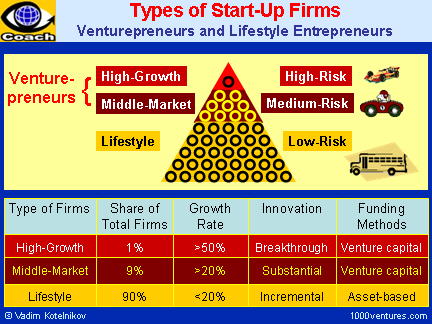
A gazelle company is an American expression for
small, fast growing companies, that creates many job opportunities. Fast growing
firms ("gazelles") are publicly
traded companies that have grown at least 20% for each of the last four years,
starting with at least US$ 1 million in sales.
Venture Management
Management of the venture-building process is
fundamentally different from corporate management that is focused
on delivering the annual operating plan. Management of a new high-growth
business is built around a customer-driven idea or a technology. It
requires
entrepreneurial mindset and skills. Being first to the market is
the top priority for the venture manager. Your core competence, the
ability to move quickly from idea to market, is a key enabler of success.

The Most Important Tasks
A survey of fast-growth companies performed by the Ivey Institute for
Entrepreneurship, Canada asked business leaders to rank tasks and practices
by difficulty and importance. Here are the five most important tasks
identified by firms with the fastest growth rates:
-
Attracting qualified people for key positions.
-
Retaining key employees. One particular challenge for growth
companies: compensating the founding staff. When rapid growth demands
new employees and new skills there are often serious tensions between
the new employees, who start out at competitive wages with defined jobs,
and the veterans, who have brought the company to its lofty heights.
-
Developing financial monitoring systems.
-
Providing product support and customer service.
-
Developing internal control systems.
Sustainable Competitive Advantage
Sustainable competitive advantage allows
the maintenance and improvement of the enterprise's competitive
position in the market. It is an advantage that enables business to
survive against its competition over a long period of time...
More

Managing Rapid Growth
Raid growth can be a killer. Research7 has
shown that the primary reason fast-growing firms may struggle or fail is not
shrinking demand for their products or, but their inability to perform the
myriad tasks required to sustain rapid expansion.
Getting it all
done is a pressing concern for many of today's business leaders.
The CEO of
a rapid-growth firm has a particular set of challenges, from managing cash
flow and choosing partners for alliances to fostering an open work
environment and obtaining employee buy in.
Poor product
quality, missed deadlines and reduced customer service are symptoms of the
real problems they face in this unique situation: management's inability to
cope with the organizational vicissitudes of growth.

Growth Attitude
Growth attitude is a combination of skill, experience,
and judgment, with a dash of courage and a dose of arrogance. This
attitude
establishes a context within which new
managers lead by setting direction, creating
enterprise strategy, securing
resources, defining organization architecture, and ensuring that learning
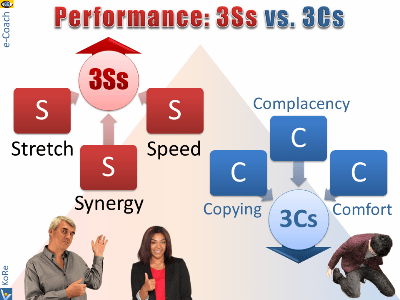
occurs. The Growth Attitude is essential in order to overcome the stagnation
of operations and the complacency that naturally occurs as firms age...
More
Entrepreneurial Leadership
In the new era of rapid changes and
knowledge-based enterprises, managerial work becomes increasingly
a leadership task. Leadership is the primary force behind successful change.
Leaders
empower employees to act on the
vision. They execute through
inspiration and develop implementation capacity networks through a complex
web of aligned relationships.
Entrepreneurial leadership involves instilling the
confidence to think, behave and act with
entrepreneurship in the
interests of fully realizing the intended purpose of the organization
to the beneficial growth of all stakeholders involved.

The Role of Innovation
Becoming an industry
leader requires significant revenue growth beyond what can be attributed to
incremental efficiency improvements.
The essential ingredient is radical
innovation that gives the innovation leaders a substantial edge in
faster revenue growth. More than three-quarters of CEOs of fast-growing
companies cited innovation as their strongest
competitive advantage, according
to a PricewaterhouseCoopers survey...
More
Radical Innovation
Radical innovation, concerned with exploration
of new technology, is
fundamentally different
from incremental innovation that is concerned with exploitation of existing
technology. Long-term corporate success linked to the
ability to innovate. Although corporate investment in
improvements to existing products and processes does bring growth, it is
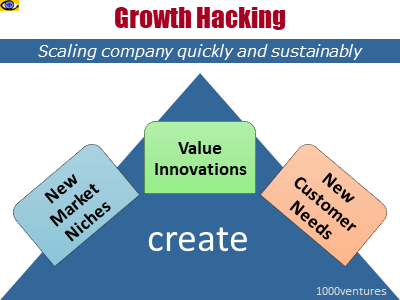
new game changing breakthroughs that will launch company into new markets,
enable rapid growth, and create high return on investment.
Radical innovation should be a continued
activity to help your company reinvent itself and maintain its leadership.
Incremental innovation allows you address the
ever-changing needs of current customers and keeps cash flow healthy, but it
must be supplemented by periodic infusion of radical innovation that creates
a new market niche or adds new disruptive value to the existing marketplace,
changes the game and provides a platform for the long-term growth...
More

The Importance of
Being
First-to-Market...
Creating Sustainable Profit Growth: 9
Questions to Answer...
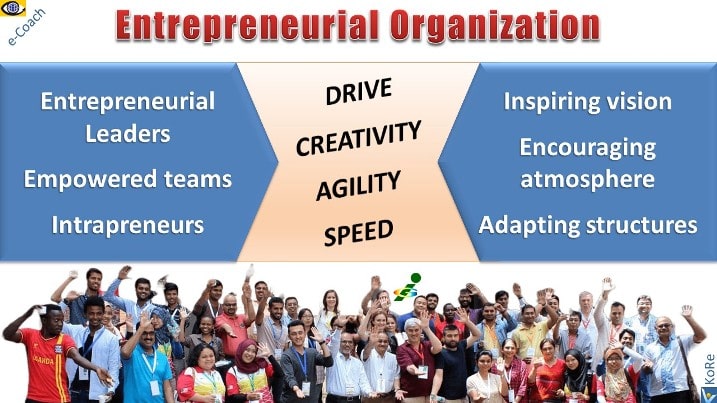
Entrepreneurial
Organization...
Mobilizing Your
Organization...
Change and
Leadership...
What Today's Workplace Needs Its
Leaders To Do...
Creative Leadership...
Continuous Rewriting of Leadership
Rules...
New-to-the-World
Product Development...
Owning
Your Competitive Advantage...
Leading
Transformational Change...
Making Big Changes...
10 Steps to Develop Entrepreneurial
Staff...
Principles for
Driving Growth Through Innovation...
Value Innovation...
Best Practices for Maintaining The Effectiveness
and Efficiency...
Integrating E-business...
Case in Point
3M...
Case in Point
Charles
Schwab...
Case in Point
Dell
Computers...
 |